Hello, homemaker!
There are some things I never imagined I would make from scratch.
Bread flour was one of them.
When we moved to the Philippines from Puerto Rico, I quickly realized that some pantry staples were not as easy to find as they once were. Where we live now, I do not have many options when it comes to bread flour, and I definitely cannot find the King Arthur bread flour everyone online seems to rave about.
Now, I am sure you can make delicious bread with just about any bread flour when you have a good recipe. But deep down, I also wanted to learn how to make certain pantry staples myself so I would not have to rely so heavily on the store.
That is when I started researching how to make bread flour at home, and honestly, I wish I had done it sooner.
You really can turn all-purpose flour into bread flour by adding just one simple ingredient. Once I realized how easy it was, I stopped buying bread flour from the store altogether. That alone makes this little kitchen skill worth it to me.
Homemade bread flour is project #49 of my 100 homemade projects within 1 year, and it has officially become one of those simple homemaking swaps I plan to keep right on using.
So if you have ever needed bread flour and could not find it, or if you just have not been impressed with the options available to you, here is exactly how to make it yourself.
What Is Bread Flour?
Bread flour is a type of flour with a higher protein content than all-purpose flour.
In general, bread flour has about 12 -14% protein compared to all-purpose with only between 8-11%. Now that protein percentage might not seem like a lot, but it does make a difference in baking.
That higher protein matters because it helps create more gluten, which gives yeast breads their structure, chew, and lift. It is especially useful for recipes like sandwich bread, dinner rolls, buns, pizza dough, and other breads where you want a stronger dough and a better rise.
You can absolutely make bread with all-purpose flour. I have done that many times. But when I want a softer crumb with better structure and a loaf that rises a little more beautifully, bread flour really does help.
Can You Make Bread Flour at Home?
Yes, you can.
The easiest way to make homemade bread flour is by combining all-purpose flour with vital wheat gluten.
Vital wheat gluten is what boosts the protein content of regular flour, helping it perform more like bread flour in yeast baking.
This is one of those practical homemaking tricks that feels almost too simple once you learn it. Two ingredients, a quick stir, and suddenly you have exactly what you need.
Why Would You Make Your Own Bread Flour
There were quite a few reasons you might want to start making your own bread flour instead of continuing to buy it from the store:
A Healthier Option
Making your own bread flour gives you more control over what goes into it. You can use unbleached all-purpose flour, which is something I personally prefer when baking for my family.
More Control Over Ingredients
You know exactly what you are using. When you make your own bread flour, you are not left wondering how the flour was processed or what kind of flour blend is in the bag.
A More Sustainable Homemaking Skill
Part of this season of homemaking for me is learning how to make more of my pantry staples from scratch. I wanted to know how to make bread flour myself instead of always depending on the store.
Less to buy at the store
Instead of buying both all-purpose flour and bread flour, you can simply keep all-purpose flour on hand and make bread flour whenever you need it. That means fewer specialty items to shop for and one less thing to worry about running out of.
More pantry flexibility
If you run out of bread flour unexpectedly, you do not have to change your baking plans or make another trip to the store. You can make what you need right from what you already have in my pantry.
Ingredients You Need
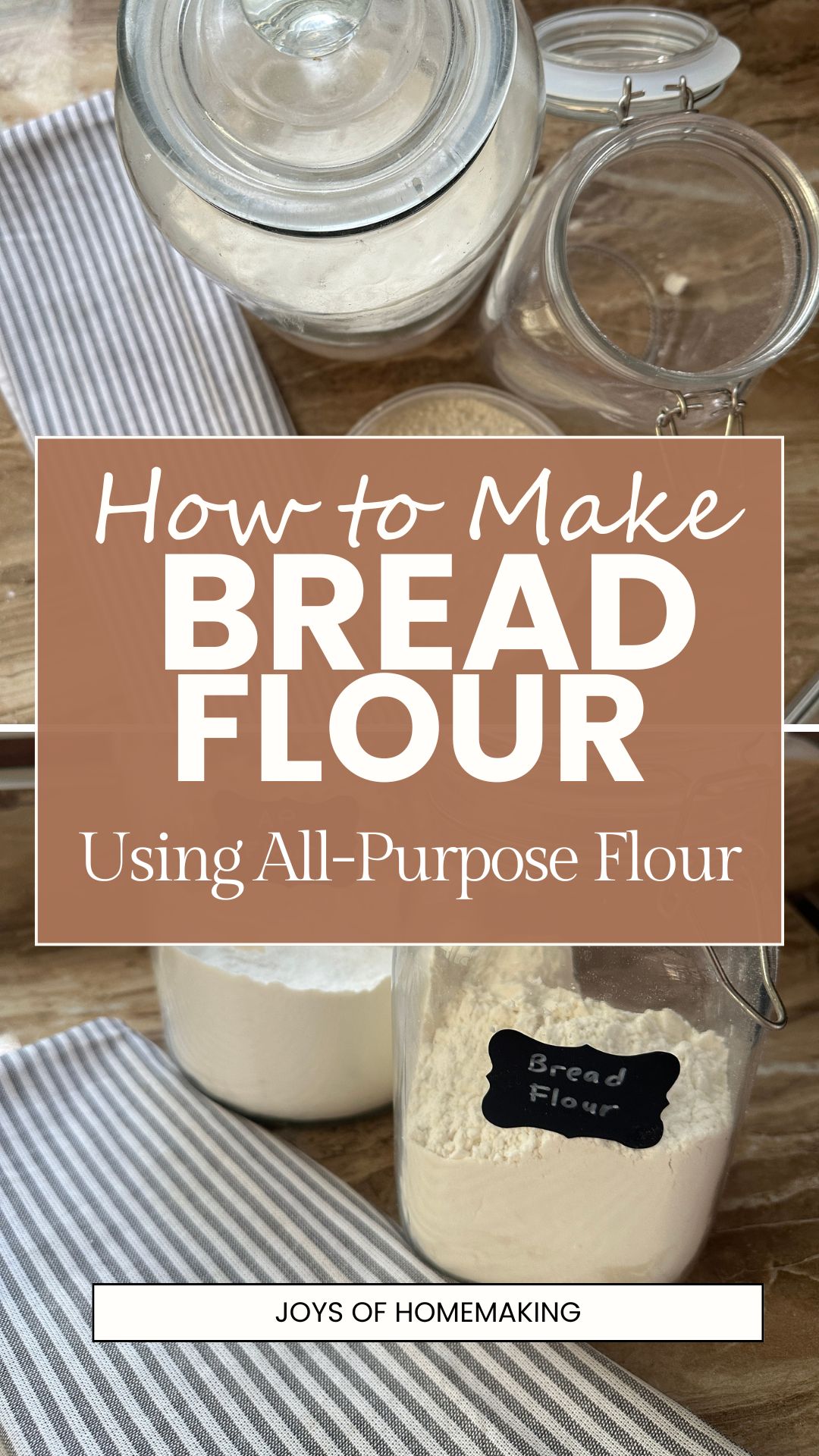
To make homemade bread flour, you only need two ingredients:
That is all.
Once you have vital wheat gluten in your pantry, you can make bread flour anytime you need it.
How to Make Bread Flour
For every 1 cup of bread flour needed in a recipe:
- measure 1 cup all-purpose flour
- remove 1 ½ teaspoons of the flour
- replace it with 1 ½ teaspoons vital wheat gluten
- whisk well to combine
That is it.
You now have a simple homemade bread flour substitute that works beautifully in yeast bread recipes.
Example for 3 Cups of Bread Flour
If your recipe calls for 3 cups bread flour, here is what you would do:
- measure 3 cups all-purpose flour
- remove 4 ½ teaspoons flour
- add 4 ½ teaspoons vital wheat gluten
- whisk thoroughly
Homemade Bread Flour Ratio
The easy ratio to remember is this:
For every 1 cup of all-purpose flour, replace 1 ½ teaspoons with vital wheat gluten.
Once you do it once or twice, it becomes second nature.
Tips for the Best Results
Whisk It Well
Make sure the vital wheat gluten is evenly mixed into the flour. This helps the flour perform more consistently in your recipe.
Measure Carefully
If you are measuring flour in cups, spoon it into the measuring cup and level it off instead of scooping directly from the bag. This helps prevent using too much flour.
Watch Your Dough
Humidity and flour brands can affect bread dough, especially in warm climates. Pay attention to how your dough feels and adjust with a little extra flour or water if needed.
Store It Properly
Store your homemade bread flour in an airtight container in a cool, dry place.
Label Your Jar
If you make a larger batch ahead of time, label it so you remember what it is.
What Can You Use Homemade Bread Flour For?
You can use homemade bread flour in most recipes that call for bread flour, especially yeast breads like:
- sandwich bread
- dinner rolls
- burger buns
- pizza dough
- cinnamon rolls
- rustic loaves
I have found it especially helpful whenever I want a dough with a little more strength and a better rise.
Is Homemade Bread Flour Better Than Store-Bought?
For me, yes.
At least compared to the bread flour options I currently have available locally, homemade bread flour has given me much better results.
That may not be true everywhere or with every brand, but in my kitchen, this homemade version has been the better choice. My loaves rise better, the texture is better, and I feel good knowing I can make it myself whenever I need it.
Sometimes the homemade version starts out as a workaround and ends up becoming your preferred method. That is exactly what happened here.
Why This Is a Useful Homemaking Skill
This may seem like a small thing, but I think those small kitchen skills add up.
Learning how to make bread flour at home means one less thing to depend on the store for. It means being able to work with what you already have. It means building a kitchen that is a little more prepared, a little more practical, and a little more resourceful.
That is a big part of the joy of homemaking for me.
Not making everything from scratch just for the sake of it, but learning which things are worth doing because they truly make life easier, better, or more sustainable in the long run.
Homemade bread flour definitely fits into that category.
Final Thoughts
Learning how to make bread flour at home has been one of those simple kitchen changes that made a bigger difference than I expected.
What started as frustration over limited bread flour options here in the Philippines turned into a practical homemade solution that actually works better for my bread baking. And that is the kind of homemaking win I always appreciate most.
It is simple. It is useful. And it helps me make better bread without relying on store-bought bread flour that I do not love.
So if you have been disappointed with your bread flour options, or if you just want to be a little more self-sufficient in the kitchen, give this a try.
You may find yourself wondering why you did not start sooner too.
And for me, this one is happily checked off as project #49 of my 100 homemade projects within 1 year.
Looking for more Homemade Ideas?
Feel free to browse around and get inspired!