Hello, homemaker!
Today, I made homemade baking powder because, well… I’ve been on this little kick of wanting to know where all my food comes from.I’ve been craving a more sustainable rhythm at home—using what we have, wasting less, and learning how to do the simple things for ourselves when we can. Not in a perfectionist way (because goodness knows I’m not making everything from scratch), but in a practical, everyday homemaking kind of way that actually fits real life.
Not so long ago, I made homemade garlic powder, and I was honestly surprised by how good it turned out. The store-bought kind I used to grab doesn’t even compare—homemade was fresher, richer, and tasted like actual garlic (imagine that!). That little win gave me the confidence to keep going.
So today’s experiment was baking powder. It’s such a basic staple, but it plays a big role in our pancakes, muffins… all the cozy things. And since it’s something I reach for all the time, I figured, why not try making it myself? Worst case, I learn something. Best case, I’ve got one more little homestead-ish skill tucked into my back pocket—and one less item I have to run to the store for.
And if you’ve been following along, this one is extra fun for me: homemade baking powder is project #45 in my “100 homemade projects in 1 year” goal here on Joys of Homemaking. So we’re almost halfway there—stay tuned, because we’ve got lots more simple, make-it-at-home goodness coming.
Why I Wanted to Make My Own Baking Powder
Baking powder is one of those pantry staples I’ve bought without thinking for years. But lately I’ve been paying closer attention to ingredients, not from a place of fear—just curiosity.
I want to know:
- What’s in my food
- Why it’s in there
- And if I can make it myself with things I already keep on hand
Sometimes it’s also just practical. You’re halfway into a recipe, the oven is preheating, and you realize your baking powder is expired (or completely empty). That little moment will humble you fast.
Making your own means you can mix up exactly what you need, right when you need it.
First Things First: What Even Is Baking Powder?
Baking powder is basically a ready-to-go leavening mix—it helps baked goods rise. It’s made of:
- Baking soda (the base)
- An acid (usually cream of tartar)
- A starch (to keep it dry and prevent clumping)
That’s it. Three simple ingredients doing a very important job.
Homemade Baking Powder Recipe (Small Batch)
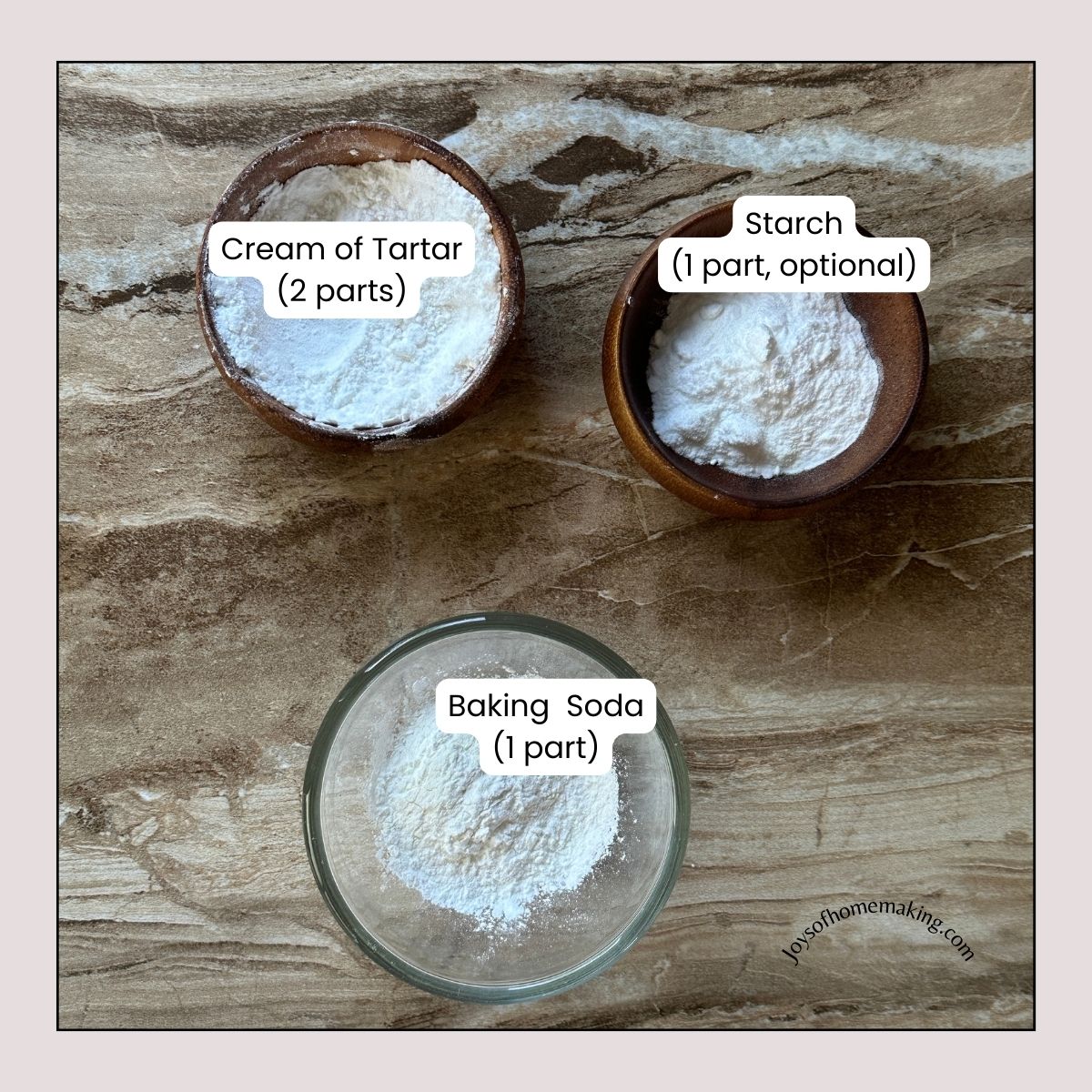
Here’s the easy ratio to remember:
Mix together:
- 2 tablespoons cream of tartar
- 1 tablespoon baking soda
- 1 tablespoon cornstarch or arrowroot powder
That equals about 4 tablespoons of baking powder total.
Note: if you're simply mixing up a bit of baking powder for a recipe you are making right away, you'll only need cream of tartar and baking soda.
However, if you plan to store your baking powder for future use, you'll need to add 1 part starch. This extends the shelf life of the baking powder by preventing caking.
What If I Don’t Want to Use Cornstarch?
I get it. Some families avoid it, or you may just not have it.
You have options:
- Arrowroot powder works similarly as a starch substitute.
- Or you can skip the starch entirely if you’re using it immediately.
If you make it without starch, I recommend mixing it fresh as needed, because moisture can affect it faster.
How to Use It
Use it 1:1 in recipes that call for baking powder.
So if a recipe calls for 2 teaspoons baking powder, use 2 teaspoons homemade baking powder.
However, if you're replacing 1 teaspoon of baking powder without the starch, you would only need ¾ teaspoon for your recipe.
How I Made It
I just grabbed a little mason jar, measured everything right in, and stirred it up with a spoon. Then I popped the lid on and gave it a good shake until it was evenly mixed. Simple as that!
And oh, I labeled the container because Future Me deserves that kindness. 🙂
How to Store Homemade Baking Powder
If you’re making a batch to keep:
- Store in an airtight container
- Keep it in a cool, dry pantry
- Label it with the date
Because homemade baking powder doesn’t have preservatives, it’s best used within a few months—especially if your kitchen is humid.
How to Test If It’s Still Active
This is my favorite little homemaking trick.
Put 1 teaspoon of your baking powder in a cup and add a splash of hot water.
If it bubbles and fizzes right away, it’s good.
If it just sits there looking sad… it’s time to toss and remake.
Looking for More Homemade Ideas?
If you’re in the mood to keep making simple things from scratch, I’ve got you! Here are a few more homemade projects to browse through—hopefully they’ll spark your next little kitchen adventure.
My Takeaway
I’ll be honest—am I going to start making every pantry item from scratch and never buy anything again? Probably no. Real life is real life. 😄
But I do love knowing I can make things like this when I want to or when I need to. There’s something so satisfying about realizing that a lot of “store-bought” staples aren’t mysterious at all… they’re just a few simple ingredients doing their job. And I love getting to show my kid (and remind myself) that we’re capable of more than we think—we can learn these little homemaking skills one by one.
And if nothing else… I’m pretty happy to say I’ll never be held hostage by an expired can of baking powder again.
Did you enjoy this post? Save this post so you can easily find your way back to this post when you need it!