Hello, homemaker!
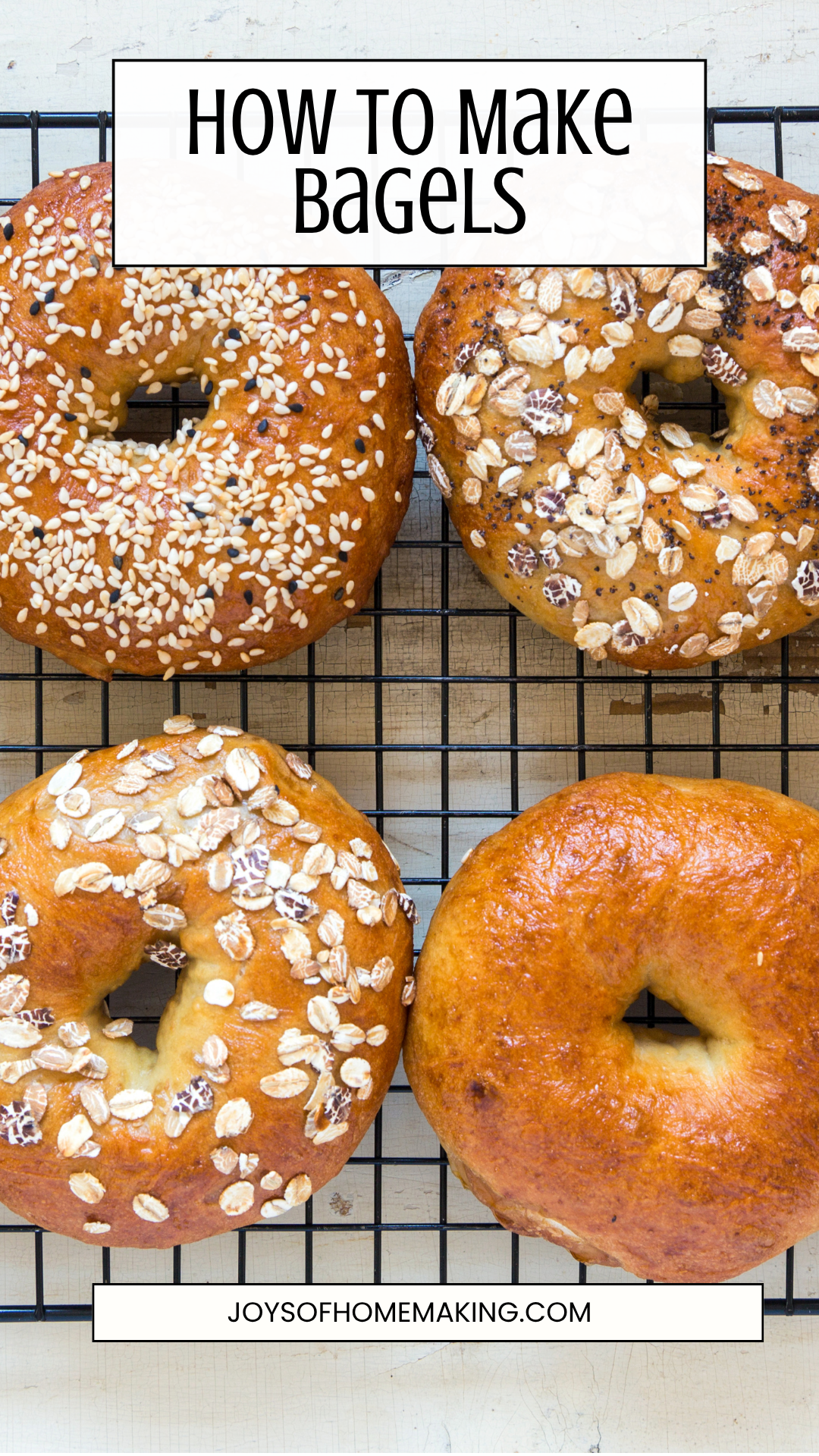
Bagels are one of those things I have wanted to learn how to make for quite a while.
I love my super-indulgent baked treats—especially cinnamon rolls and soft dinner rolls—but those usually contain more butter, sugar, and other rich ingredients. They are absolutely worth making once in a while, but I also wanted a homemade bread that I could comfortably serve for breakfast a few times a week.
So here it is: homemade bagels!
This is project #77 in my 100 Homemade Projects in 1 Year series, and this was another one of those projects that reminded me how many things we normally buy from the store are completely doable at home.
Bagels are actually pretty simple. The process is a little different from regular bread because you boil them before baking, but don't let that step intimidate you. Boiling is what gives bagels that slightly chewy outside and soft, dense inside that makes them so good.
And once you know how to make the basic dough, you can turn it into all kinds of bagels—plain, sesame, everything bagels, cinnamon raisin, cheese, and more.
Why I Wanted to Make Bagels at Home
I've been baking more and more of our bread at home, and one thing I've learned is that homemade bread doesn't always have to mean a big complicated baking project.
Sometimes I just want something simple that we can toast in the morning, spread with cream cheese, turn into a breakfast sandwich, or eat alongside eggs.
Compared with some of the richer breads I make, these basic bagels contain very little fat and only a small amount of sugar. That makes them a nice option when I want homemade bread without making another batch of buttery rolls or sweet pastries.
Plus, when I make them myself, I know exactly what's going into them.
No long list of preservatives or ingredients I wouldn't normally use in my kitchen—just a few basic pantry staples.
Homemade Bagel Ingredients
This recipe makes about 8 bagels.
You'll need:
- 1 ½ cups (300 ml) warm water, about 105°F to 110°F
- 2 ¼ teaspoons (1 standard packet or 7 grams) active dry yeast or instant yeast
- 1 tablespoons sugar or honey
- 1 teaspoon fine salt (about 10 grams)
- 4 cups bread flour (about 500 grams), plus a little extra if needed for kneading
For Boiling
- 8 to 10 cups water, or enough to fill a large pot several inches deep
- 1 tablespoon baking soda
- 1 tablespoon honey or brown sugar, optional
Optional Toppings
Use as much or as little as you like:
- Sesame seeds
- Poppy seeds
- Everything bagel seasoning
- Coarse salt
- Shredded cheese
You can also leave the bagels completely plain.
Ingredient Substitutions
Bread flour: Bread flour gives bagels their characteristic chewy texture because it contains more protein than all-purpose flour. If you don't have bread flour, you can substitute all-purpose flour in the same amount. The bagels will still work, but they may be a little softer and less chewy.
If measuring flour by cups, spoon it into the measuring cup and level it rather than packing it down. Even better, use a kitchen scale if you have one. Bagel dough should be fairly firm, so add only enough extra flour to keep the dough manageable.
Active dry yeast: You can use 2 ¼ teaspoons active dry yeast or 2 ¼ teaspoons instant yeast. Either works in this recipe.
If using active dry yeast, I like to dissolve it in the warm water with the sugar or honey first and let it sit for 5 to 10 minutes.
If you're using instant yeast, you can mix it directly into the flour and proceed with the recipe.
Sugar or honey: Either one works. Use 1 tablespoon of whichever you have on hand. The small amount of sweetener helps feed the yeast and adds a little flavor without making the bagels noticeably sweet.
You can also use brown sugar in the dough in the same amount.
Salt: I use about 10 grams of salt. If you're measuring by volume, the exact amount can vary depending on the type and size of the salt crystals, which is why weighing it is helpful if possible.
Honey or brown sugar in the boiling water: This is optional. You can leave it out and boil the bagels in plain water. Adding a little honey or brown sugar can help with browning and gives the crust a subtle sweetness.
Bread Flour or All-Purpose Flour?
Bread flour is my first choice for bagels because its higher protein content helps develop more gluten, which creates that wonderfully chewy texture.
But don't let a lack of bread flour stop you from making these.
You can substitute all-purpose flour 1:1 by volume or weight. Your bagels may turn out a little softer, but they will still be delicious.
If you regularly make bread and keep vital wheat gluten in your pantry, you can also use it to increase the protein content of all-purpose flour. Here's my homemade bread-flour formula.
The most important thing is to pay attention to the dough itself.
Bagel dough should feel firm, smooth, and slightly tacky but not wet or sticky. It is much stiffer than cinnamon roll or dinner roll dough.
If the dough feels very dry and won't come together, add water 1 teaspoon at a time.
If it is very sticky after several minutes of kneading, add flour 1 tablespoon at a time.
Small adjustments are normal because different brands of flour absorb water differently, and even the humidity in your kitchen can make a difference.
How to Make Homemade Bagels
1. Activate the Yeast
Add the 1 ¼ cups warm water, yeast, and sugar or honey to a large mixing bowl.
If you're using active dry yeast, let it sit for about 5 to 10 minutes. You should see some foam forming on top.
If you're using instant yeast, you don't necessarily need to wait for it to foam. You can also mix instant yeast directly into the flour.
Make sure your water is warm—not hot. Water that is too hot can damage the yeast.
2. Make the Dough
Add the salt and gradually mix in the 4 cups of bread flour.
Continue mixing until a shaggy dough begins to form.
Turn the dough onto a lightly floured surface and knead for about 8 to 10 minutes, or until the dough becomes smooth and elastic.
Because bagel dough is supposed to be fairly firm, kneading it may take a little more effort than kneading softer bread dough.
Try not to keep adding flour just because the dough feels firm. A stiff dough is normal for bagels. Add extra flour only if the dough remains noticeably sticky after kneading for a few minutes.
To check if the dough has been kneaded enough, you can do the windowpane test.
Pinch off a small piece of dough and gently stretch it between your fingers. If you can stretch it thin enough that light begins to pass through without the dough immediately tearing, the gluten has developed well and your dough is ready.
If it tears right away, knead the dough for another minute or two and test it again.
Keep in mind that bagel dough is stiffer than softer bread dough, so the windowpane may not be quite as thin or transparent as it would be with something like dinner roll dough.
You can also knead the dough in a stand mixer fitted with a dough hook. Mix on low to medium-low speed until the dough is smooth, strong, and elastic.
3. Let the Dough Rise
Place the dough in a lightly greased bowl and cover it.
Let it rise in a warm place for about 1 to 1 ½ hours, or until roughly doubled in size.
The exact time will depend on the temperature of your kitchen.
4. Shape the Bagels
Punch the dough down gently and divide it into 8 equal pieces.
For evenly sized bagels, you can weigh the entire batch of dough and divide that number by eight.
Roll each piece into a smooth ball.
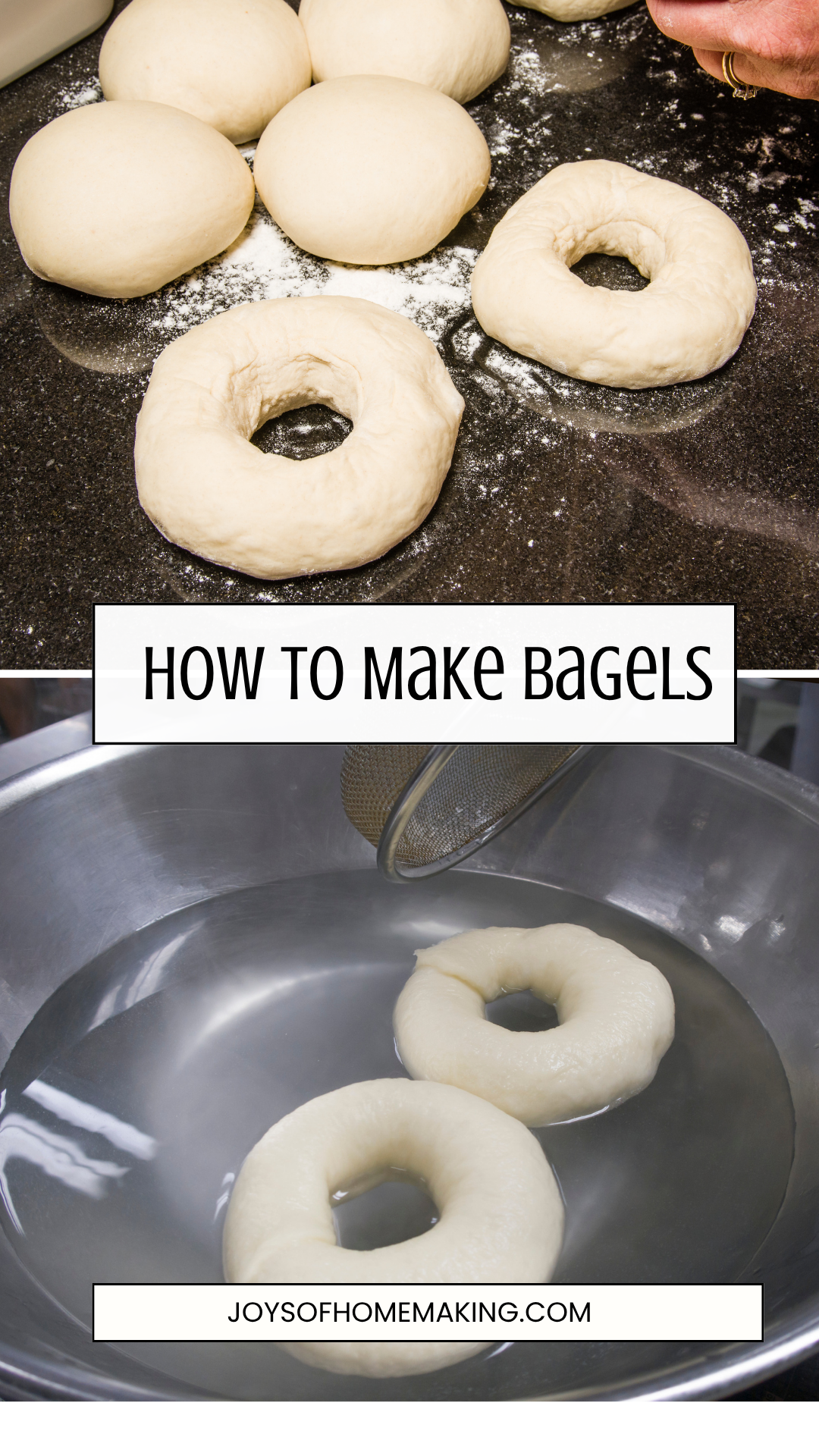
Use your finger to poke a hole through the center, then gently stretch the opening until you have a bagel shape.
Make the center hole a little larger than you think it needs to be because it will shrink as the dough rests and bakes.
Place the shaped bagels on a parchment-lined baking sheet.
Cover them loosely and let them rest for about 15 to 20 minutes while you prepare the boiling water.
Why Do You Boil Bagels?
This is the step that makes bagels different from most homemade breads.
Before baking, bagels are briefly boiled in water.
Boiling starts cooking the outside of the dough before it goes into the oven. This helps create that classic chewy exterior while keeping the inside dense and tender.
And it really isn't difficult.
Once I realized that you're only boiling them for a minute or two, the whole process seemed much less intimidating.
5. Boil the Bagels
Preheat your oven to 425°F (220°C).
Add about 8 to 10 cups of water to a large pot, or enough water for the bagels to float comfortably, and bring it to a gentle boil.
If you'd like, stir in 1 tablespoon of honey or brown sugar and 1 tablespoon of baking soda. This is optional, so plain water is perfectly fine too. This helps your bagels turn out with the classic look and texture you expect.
Carefully place a few bagels into the pot, making sure you don't overcrowd it.
Boil for about 30 to 60 seconds per side.
For a chewier bagel, you can boil them a little longer.
Remove the bagels with a slotted spoon and return them to your baking sheet.
6. Add Your Toppings
While the outside of the bagels is still slightly wet, sprinkle on your toppings.
This is when you can add sesame seeds, everything seasoning, poppy seeds, cheese, or whatever your family likes.
The moisture from boiling helps the toppings stick, so you don't necessarily need an egg wash.
7. Bake
Bake the bagels at 425°F (220°C) for approximately 20 to 25 minutes, or until beautifully golden brown.
Transfer them to a wire rack and let them cool slightly before slicing.
And that's it—you just made homemade bagels!
Easy Homemade Bagel Variations
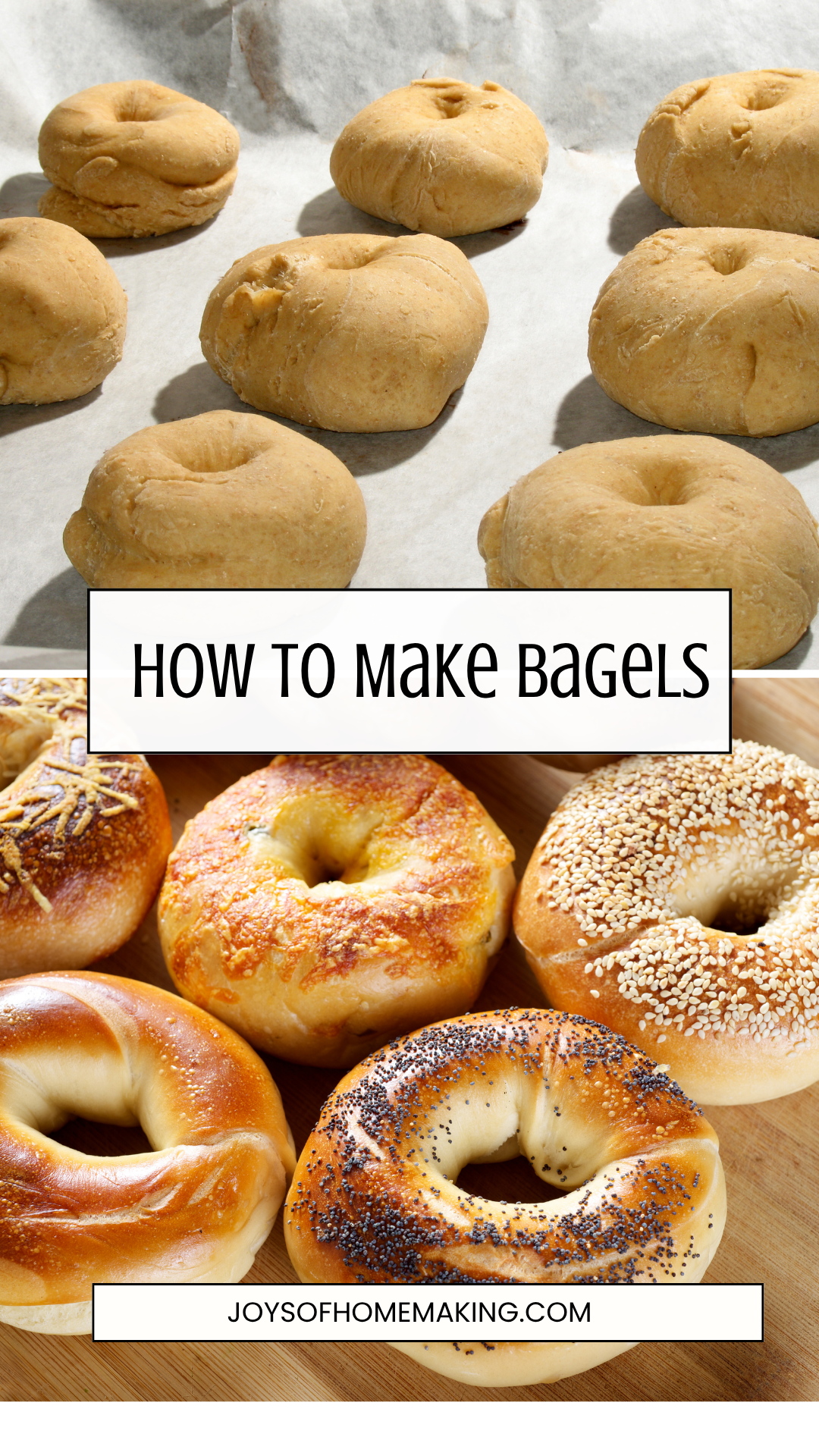
Once you have the basic recipe down, there are so many ways you can change it.
Everything Bagels
Sprinkle everything bagel seasoning over the boiled bagels before baking.
Sesame Bagels
Coat the tops generously with sesame seeds.
Cheese Bagels
Sprinkle shredded cheddar or another favorite cheese over the top before baking.
Cinnamon Raisin Bagels
Add cinnamon and raisins to the dough before shaping.
You may want to add a little extra sugar or honey for a slightly sweeter bagel.
What to Eat With Homemade Bagels
Of course, cream cheese is probably the first thing that comes to mind.
But there are so many other ways to eat them.
You can toast them and add butter, peanut butter, eggs, cheese, avocado, or use them to make breakfast sandwiches.
They also make an easy grab-and-go breakfast when you don't feel like cooking something elaborate in the morning.
Can You Freeze Homemade Bagels?
Yes!
Bagels freeze really well.
Let the bagels cool completely, then place them in a freezer-safe bag or container. You can freeze them for up to about 3 months.
I like slicing them before freezing so I can pull one out and put it straight into the toaster.
You can also thaw them at room temperature before reheating.
Tips for Better Homemade Bagels
Measure flour carefully. If possible, weigh your flour for the most consistent results. If you're using measuring cups, spoon the flour into the cup and level it instead of packing it down.
Pay attention to the dough rather than adding flour automatically. Bagel dough should be noticeably firmer than ordinary bread dough.
Use bread flour if possible. Its higher protein content gives the finished bagels a chewier texture, but all-purpose flour works in a pinch.
Make small adjustments if necessary. If your dough seems too dry, add water a teaspoon at a time. If it's genuinely sticky, add flour a tablespoon at a time.
Use the windowpane test. This is an easy way to check whether you've developed enough gluten during kneading.
Don't skip the boiling step. That's what helps create the classic bagel texture.
Make the center holes fairly large. They will shrink as the bagels rise and bake.
Don't overcrowd the pot. Give the bagels enough room to float while boiling.
Experiment with the boiling time. A shorter boil creates a slightly softer crust, while a longer boil gives you more chew.
Are Homemade Bagels Healthier?
"Healthy" can mean different things to different people, so I wouldn't necessarily call every bagel a health food.
But compared with the cinnamon rolls and buttery dinner rolls I also love making, this basic bagel recipe is much simpler. It doesn't require butter, oil, eggs, or large amounts of sugar.
And making them at home means I get to choose exactly what goes into them.
For our family, they're simply another homemade option I can keep in rotation alongside all the richer breads and baked treats we enjoy.
Final Thoughts
I'm so glad I finally crossed homemade bagels off my list!
They look like something that would be difficult to make, but once you've made the dough and shaped them, the only unusual step is giving them a quick boil before baking.
Now I can make a batch, freeze some for later, and have homemade bagels ready for breakfast whenever we want them.
And that's project #77 of my 100 Homemade Projects in 1 Year!
If you're also trying to learn how to make more everyday things at home instead of relying on the store, be sure to check out the rest of my 100 Homemade Projects here on Joys of Homemaking.