Hello, homemaker!
Today I’m going to show you just how easy it is to make mayonnaise at home. And when I say easy, I mean surprisingly easy.
Homemade mayonnaise is Project #76 in my 100 Homemade Projects in 1 Year Series, and this project is going to be a little different from the others.
When I started this series, one of my biggest goals was simply to learn how things are made. There are so many everyday products we automatically pick up at the grocery store without ever really thinking about what goes into making them.
The more I learn, though, the more I realize that many of these things aren’t nearly as complicated as I thought.
Mayonnaise was definitely one of them.
I always assumed making mayonnaise would be complicated. But I wanted to try it anyway.
Part of my goal with these homemade projects is to make as many everyday things at home as reasonably possible so that our family can rely a little less on the store. It doesn’t mean I will never buy mayonnaise again, but I love knowing that if I have a few basic ingredients in my kitchen, I can make it myself.
And honestly?
I was so surprised by how easy homemade mayonnaise is.
So instead of sharing only the recipe, I thought it would be fun to actually review this homemade project.
I’m rating my homemade mayonnaise based on:
- Taste
- Convenience
- Affordability
- Health and ingredient control
- And, most importantly… will I actually make it again?
Let’s make some mayonnaise!
What Is Mayonnaise Made Of?
One of the things I love about making everyday foods from scratch is realizing how simple some of them really are.
At its most basic, mayonnaise is an emulsion made by combining egg, oil, and an acid such as lemon juice or vinegar.
That’s really it.
You can add mustard, salt, and other seasonings for flavor, but you don’t need a long list of ingredients to make creamy mayonnaise at home.
The magic happens when the egg and oil are blended together and the oil becomes suspended throughout the mixture, creating that thick, creamy texture we recognize as mayonnaise.
Sounds complicated when you explain the science behind it.
Actually making it?
Much easier.
Easy Homemade Mayonnaise Recipe
This makes a small batch, which I prefer because homemade mayonnaise doesn't have the long refrigerator life of the commercial kind.
Ingredients
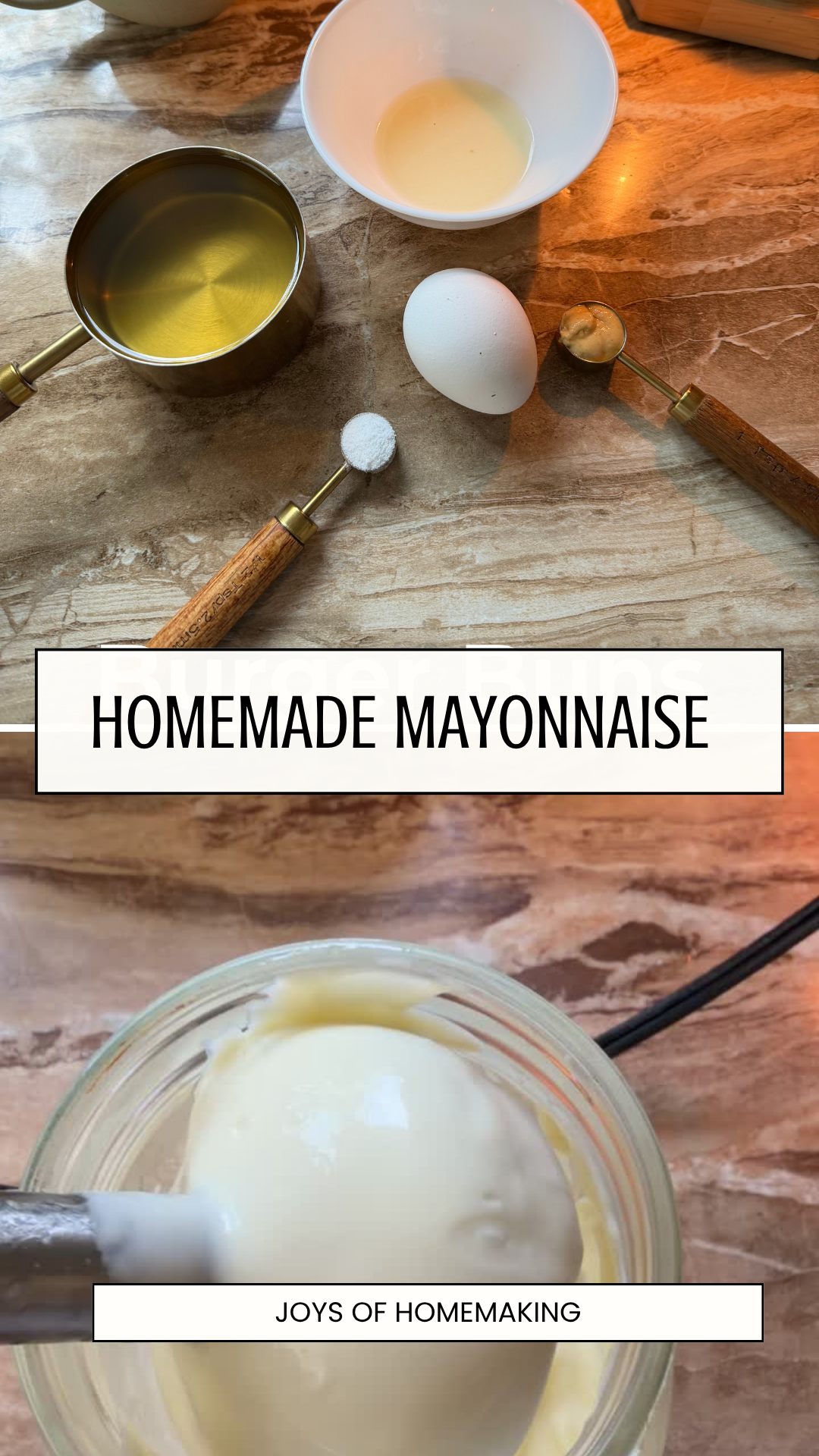
- 1 large egg - I do recommend pasteurized egg
- 1 cup neutral-flavored oil
- 1 tablespoon fresh lemon juice
- 1 teaspoon Dijon mustard or regular mustard
- ¼ teaspoon salt, or to taste
You can also add a little vinegar if you like your mayonnaise slightly tangier.
Note: I couldn’t find pasteurized eggs where we live, and since I don’t have my own chickens, I used eggs from our local grocery store. If pasteurized eggs are available in your area, though, I recommend using them for homemade mayonnaise since the eggs are not cooked.
What Oil Should You Use for Homemade Mayonnaise?
The oil makes up a large portion of mayonnaise, so it has a big effect on the final flavor.
You can use oils such as:
- Avocado oil
- Light olive oil
- Sunflower oil
- Grapeseed oil
- Another mild, neutral-flavored cooking oil such as refined coconut oil.
I would be careful with strongly flavored extra-virgin olive oil. It can sometimes make mayonnaise taste bitter or overpower the other ingredients.
This is also one of the nice things about homemade mayonnaise—you get to choose the oil you want to use instead of simply accepting whatever oil is in the jar from the grocery store.
How to Make Mayonnaise with an Immersion Blender
An immersion blender makes this ridiculously easy.
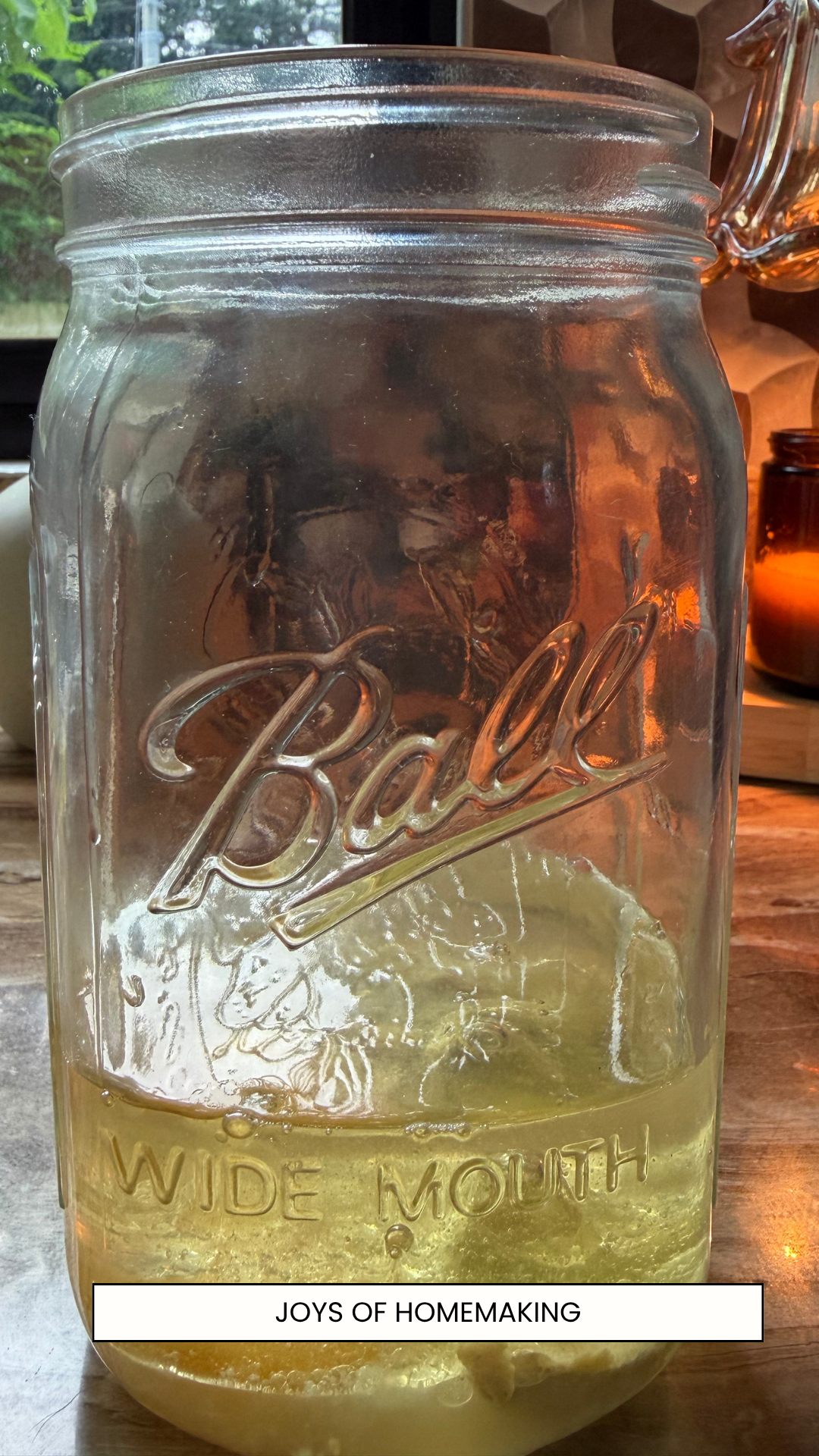
Use a tall container or jar that is only slightly wider than the head of your immersion blender. I used a 32 oz wide-mouthed mason jar.
Step 1: Add the ingredients.
Add the egg, lemon juice, mustard, and salt to your container. Please wait for 60 seconds or so before pouring your oil. Pouring oil in all at once or too quickly overwhelms the egg yolk before it can trap the oil droplets, resulting in a runny mayo.
So wait for about 1 minute before you pour the oil on top.
Give everything a moment to settle.
Step 2: Place the immersion blender at the bottom.
Put your immersion blender all the way down into the container so that it is sitting over the egg.
Don't start moving it up and down yet.
Step 3: Start blending.
Turn the immersion blender on while keeping it at the bottom of the container.
Within seconds, you'll start seeing a thick, pale mayonnaise forming underneath the oil.
This was the part that surprised me the most.
It really does start looking like mayonnaise almost immediately!
Step 4: Slowly lift the blender.
Once the bottom portion has thickened, slowly lift and tilt the immersion blender so the remaining oil gets incorporated.
Continue blending just until everything is creamy and combined.
And that's it.
You just made mayonnaise.
Taste it and add a little more salt, lemon juice, or mustard if you prefer.
Can You Make Mayonnaise Without an Immersion Blender?
Well, apparently, yes.
You can also make mayonnaise using a regular blender or food processor.
Blend your egg, lemon juice, mustard, and salt first. Then, with the blender running, very slowly drizzle in the oil.
The important part is adding the oil gradually so that it emulsifies instead of separating.
Personally, I've not tried the blender method so I don't know which method is better or easier.
What If My Mayonnaise Doesn't Thicken?
Don't immediately throw it away!
Mayonnaise can break if the ingredients don't emulsify properly.
If yours looks thin or separated, you can often save it.
Place another egg yolk in a clean container and begin blending it. Then slowly add your broken mayonnaise while continuing to blend.
You can also try blending a little longer before assuming it has failed.
And if your mayonnaise turns out too thick, blend in a teaspoon of water or lemon juice until it reaches the consistency you like.
My Homemade Mayonnaise Review
Now for the fun part.
Was this homemade project actually worth it?
After making so many things from scratch for this series, I've learned that just because I can make something at home doesn't necessarily mean it makes sense for me to keep making it.
Some projects are fun to try once.
Others become permanent staples in my kitchen.
So here's how homemade mayonnaise did.
Taste: 5/5
Homemade mayonnaise tastes so fresh.
It's creamy, rich, slightly tangy, and you can adjust it exactly the way you like it.
Want it tangier? Add more lemon.
Want more mustard flavor? Add mustard.
Want garlic mayonnaise? Add garlic.
You can really make it your own.
I tastes good so I gave it 5/5. However, I did notice a slight difference between homemade and store-bought mayonnaise. My favorite store-bought mayonnaise does have more eggy taste that I love and that I am used to.
So to me, while homemade mayonnaise tastes like mayonnaise , it still needs some getting used to for me to enjoy it like the store-bought version.
Taste: ★★★★★
Convenience: 4.5/5
Before making this, I would have assumed store-bought mayonnaise would win easily when it comes to convenience.
And technically, opening a jar from the refrigerator is obviously easier.
But making mayonnaise takes only a few minutes.
If I already have eggs, oil, lemon juice, and mustard in the kitchen, I can whip up a batch without making a special trip to the grocery store.
That alone still makes it convenient to me.
The only downside is that homemade mayonnaise doesn't last nearly as long as commercial mayonnaise, so I would rather make small batches as I need them.
Convenience: ★★★★½
Shelf Life: ⅗
Shelf life is probably the biggest downside of homemade mayonnaise for me.
Unlike store-bought mayonnaise, which can stay in the refrigerator for quite a while after opening, homemade mayonnaise has a much shorter shelf life because it doesn't contain commercial preservatives.
For that reason, I recommend making a small batch that we can use within a few days rather than making a large jar at once. Also keep it refrigerated at all times and use a clean spoon whenever you take some out.
The shorter shelf life isn't necessarily a deal-breaker for me because mayonnaise is so quick to make. You can simply make another small batch whenever you need it. But compared with the convenience of keeping a store-bought jar in the refrigerator, homemade mayonnaise definitely loses a few points here.
Shelf Life: ★★★☆☆
Affordability: ⅘
This one really depends on the oil you use.
Eggs, lemon juice, mustard, and salt don't add much to the cost, but one cup of oil can make homemade mayonnaise more expensive if you're using something like a good avocado oil.
If you use an affordable neutral oil you already keep in your pantry, though, the cost can be very reasonable.
I also like that I can make just what we need instead of keeping another large container in the refrigerator.
So I'm giving this one:
Affordability: ★★★★☆
Health and Ingredients: 4.5/5
I'm giving homemade mayonnaise a high rating in this category mainly because of ingredient control.
When I make it myself, I know exactly what's going into the jar.
I can choose the oil.
I can control the amount of salt.
I can use fresh lemon juice.
And I don't need to add preservatives simply to make a jar last for months.
Of course, mayonnaise is still primarily oil, so I wouldn't call it a low-calorie food just because it's homemade. Homemade doesn't automatically mean you can eat unlimited amounts of something!
But for our family, I really appreciate being able to make a simple version with ingredients I choose myself.
Health & Ingredient Control: ★★★★½
Sustainability: 4.5/5
Another reason I like making mayonnaise at home is that it fits well with the kind of sustainable living I’m trying to practice.
Instead of buying another jar or squeeze bottle of mayonnaise every time we run out, I can make a small batch at home using ingredients I already keep in my kitchen. I can also store it in a reusable glass jar, which helps reduce the amount of single-use packaging we bring into our home.
Of course, the ingredients themselves still come in packaging, so homemade mayonnaise isn’t completely waste-free. But buying staple ingredients like oil, mustard, and salt in larger containers and using them for many different recipes can help cut down on packaging overall.
For me, sustainability isn’t about doing everything perfectly. It’s about learning practical skills, reusing what I already have, making more things at home, and relying a little less on individually packaged products from the store.
Sustainability: ★★★★½
Am I Making Homemade Mayonnaise Again?
YES. ⅘.
Am I Making Homemade Mayonnaise Again? Absolutely!
Homemade mayonnaise is so quick and easy that I can genuinely see myself making it whenever we need some for sandwiches, burgers, dips, dressings, potato salad, and other recipes.
I didn’t give this category a full 5/5, though, because honestly I still have some reservations about using regular store-bought eggs in a recipe where the egg isn’t cooked. I know many people make homemade mayonnaise this way without any problems, but personally, it’s something I’m still a little uncomfortable with.
I would feel much better about making it regularly if pasteurized eggs become easier for me to find and if I raise my own chickens. That way I know the eggs are safe to eat.
But as far as taste and ease go, homemade mayonnaise is definitely a project I would make again.
Will I make it again? ★★★★☆
My Overall Rating for Homemade Mayonnaise
So, after Project #76, here's my final score:
My Overall Rating for Homemade Mayonnaise
| Category | Rating |
|---|---|
| Taste | ★★★★★ |
| Convenience | ★★★★½ |
| Affordability | ★★★★☆ |
| Health & Ingredient Control | ★★★★½ |
| Sustainability | ★★★★½ |
| Shelf Life | ★★★☆☆ |
| Will I Make It Again? | ★★★★☆ |
Overall: 4.⅖
I would absolutely call this homemade project a success.
A Quick Food Safety Note
Because traditional homemade mayonnaise contains an egg that isn't cooked, I recommend using a pasteurized shell egg or pasteurized egg product rather than a regular raw egg. The FDA and USDA recommend pasteurized eggs for recipes such as homemade mayonnaise that are served without cooking.
Keep homemade mayonnaise refrigerated in a clean, covered container. USDA guidance says mayonnaise made with pasteurized eggs should be kept refrigerated and used within four days.
That shorter shelf life is another reason I prefer making smaller batches rather than a huge jar at once.
Ways to Use Homemade Mayonnaise
Once you know how to make it, you can use your homemade mayo anywhere you would normally use the store-bought kind.
Try it for:
- Sandwiches and wraps
- Homemade burgers
- Potato salad
- Egg salad
- Tuna salad
- Chicken salad
- Creamy salad dressings
- Ranch dressing
- Coleslaw
- Dips
- Garlic aioli
- Spreads for burgers and sandwiches
You can also use the basic recipe as a starting point and turn it into flavored mayonnaise with garlic, herbs, spices, hot sauce, or other seasonings.
Final Thoughts
I think homemade mayonnaise is a fun project to try, and I’m really glad I learned how to make it. That alone makes it worthy of a spot in my 100 Homemade Projects in 1 Year Series.
Even if you don’t end up making mayonnaise regularly, I still think knowing how to make it from scratch is a useful skill. It gives you another option when you need mayonnaise and don’t want to run to the store.
Making it yourself also gives you more control over the ingredients. You can keep the recipe simple and avoid some of the unnecessary ingredients that can be found in store-bought mayonnaise.
And that’s really what this homemade series is about for me—not necessarily replacing every single thing I buy, but learning how things are made and becoming a little less reliant on the store along the way.
If you enjoy learning how to make everyday things yourself, be sure to check out the rest of my 100 Homemade Projects in 1 Year Series. I'm slowly working my way through things I used to automatically buy and finding out which ones are actually worth making at home.