Hello, homemaker!
Are you looking for a natural alternative to chemical-heavy, store-bought shampoo? You’ve come to the right place.
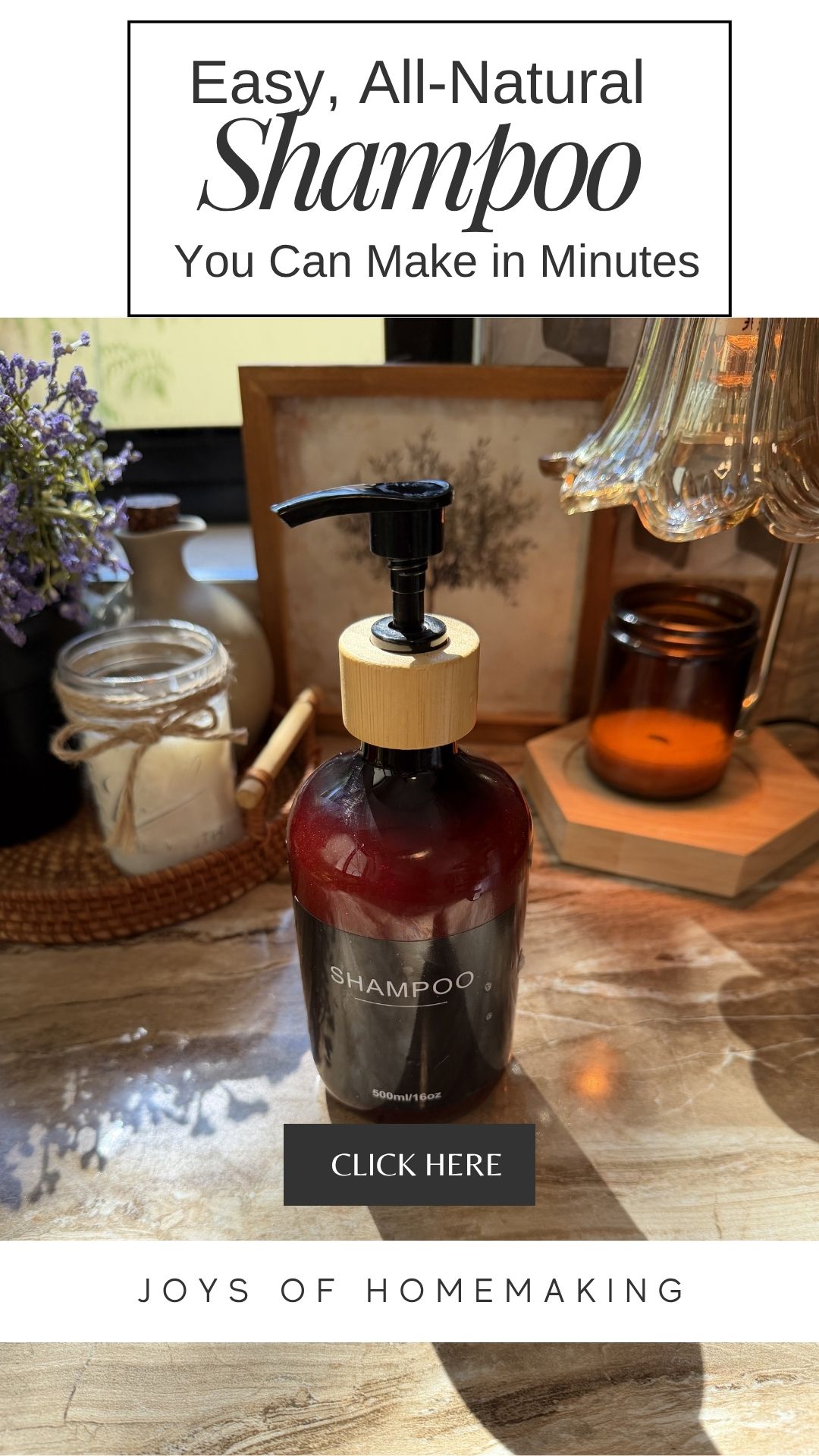
Lately, I’ve been embracing a more natural lifestyle by replacing commercial products with simple homemade alternatives. One of my favorite recent projects is this easy, all-natural shampoo recipe.
In this post, I’ll show you how to make your own natural shampoo at home. It’s gentle on your hair, kinder to the environment, and surprisingly easy to put together.
I’ll admit that I was skeptical when I first considered switching from commercial shampoo to a homemade version. Could I really make something that worked as well as the products I had been buying for years?
Eventually, I decided to give it a try—and I’m so glad I did.
Why It’s Time to Ditch Your Commercial Shampoo
I decided to try making an all-natural shampoo because many commercial options are not only expensive, but also contain synthetic ingredients. Common additives like sulfates and parabens can strip hair of natural oils or disrupt hormones, and I didn’t want to keep exposing myself or my kid to those risks.
Making my own shampoo gives me full control over the ingredients and peace of mind knowing I’m using something safe and natural. Plus, it's a more eco-friendly choice.
The beauty industry contributes heavily to plastic waste, and with only about 10% of plastic getting recycled, I felt compelled to reduce my footprint. Creating my own shampoo was a simple, conscious step toward healthier hair and a healthier planet.
Why Make the Switch to All-Natural Homemade Shampoo
This shampoo recipe is incredibly easy to make and smells amazing. Unlike the overpowering synthetic fragrances in store-bought products, this DIY shampoo has a light, refreshing scent that’s pleasant without being overwhelming.
And yes—it actually lathers! I used to associate lather with cleanliness, and now I can enjoy that same feeling without the harsh chemicals that damage my hair.
This simple change has given me a safer, healthier, and more sustainable way to care for my hair and scalp.
What to Expect When Using This DIY Shampoo
Before making the switch, keep in mind that natural shampoo may feel different from the commercial products your hair is used to. Here are a few things to expect:
It isn’t completely homemade—unless you make the Castile soap yourself.
This recipe uses store-bought Castile soap as its main cleansing and lathering ingredient. For a truly from-scratch shampoo, you can make your own liquid Castile soap and use it in the recipe instead.
Your hair may feel greasy at first.
Some people experience a transition period when switching to a natural shampoo. Give your hair and scalp time to adjust to the new routine. You may notice that your hair becomes less oily over time, although everyone’s results will be different.
You may need to adjust the amount of essential oils.
If you have naturally oily hair—or the shampoo feels too heavy—try reducing the amount of essential oils in the recipe. Start with less and experiment until you find the right balance for your hair and scalp. Always use essential oils in properly diluted amounts, and stop using the shampoo if irritation occurs.
You don’t have to give up your regular shampoo completely.
I’ve found that the best routine for me is to use this homemade shampoo a few times a week and my usual store-bought shampoo once a week. That’s perfectly okay! A natural hair-care routine doesn’t have to be all or nothing. The goal is to find a balance that keeps your hair and scalp feeling healthy.
Why This Recipe Uses Castile Soap
Castile soap serves as the cleansing base of this homemade shampoo. Traditionally made from vegetable oils, it helps remove dirt, sweat, and product buildup without relying on many of the synthetic ingredients commonly found in commercial shampoos. It also creates the light lather that makes the recipe feel more like a traditional shampoo.
Another reason I use Castile soap is convenience. Making soap from scratch requires extra ingredients, equipment, and careful handling with lye, so using a ready-made version keeps this recipe simple and approachable.
You can find liquid Castile soap in many stores or online, preferably in an unscented variety so you can customize the fragrance with your chosen essential oils. The most recommended is this liquid Castille Soap.
Because Castile soap is highly concentrated and may feel drying or too strong for some hair types, it should be properly diluted. You may also need to adjust the recipe based on how your hair and scalp respond. For a completely homemade version, you can make your own Castile soap and use it as the base instead.
What You’ll Need
- ½ cup distilled water
- ¼ cup liquid Castile soap
- 2 teaspoons avocado oil
- 1 teaspoon vegetable glycerin (optional)
- 10-15 drops of essential oils (optional)
How to Make All-Natural Homemade Shampoo
1. Get a clean bottle.
If you have an empty shampoo squeeze bottle lying around, reuse it! Not only is it practical, but it also gives your hair care routine an eco-friendly upgrade.
2. Gather and mix your ingredients.
Once you’ve assembled all the ingredients, pour them into the bottle. Give it a thorough shake to blend everything together. Be sure to shake well before each use—this keeps the mixture effective and ensures even distribution of the ingredients for best results.
More Tips
Scale it up if needed.
This recipe is incredibly versatile. You can easily double or triple the batch—just make sure your container can handle the volume!
Time to lather up.
Massage the shampoo into your scalp for a minute or two. This not only cleanses your hair but also boosts blood circulation, which can support healthy hair growth. Take a moment to enjoy the process—this is your time to relax and pamper yourself. When you're done, rinse thoroughly.
Balance your scalp’s pH.
To prevent itchiness and enhance shine, follow up with a natural rinse. Mix one part apple cider vinegar or lemon juice with three parts water and pour it over your hair after shampooing. It helps restore your scalp’s pH and leaves your hair looking glossy. Feel free to adjust the ratio to suit your hair’s needs.
Bonus tip: Add aloe vera.
Want an extra hydration boost? Mix in a tablespoon of aloe vera gel with your shampoo. It’s soothing, nourishing, and can leave your hair feeling soft and silky.
Tips on How to Switch to Homemade Shampoo
Making the move from commercial to homemade shampoo is a refreshing step—but it does come with a short adjustment period. Here’s how to make the transition smoother:
1. Expect a Transition Phase
When you first ditch chemical-laden shampoos, your hair might feel greasy or heavy. Don’t worry—this is totally normal! Your scalp is recalibrating its oil production after being stripped by harsh detergents for so long.
2. Be Gentle with Your Hair
During this phase, treat your hair with extra care. Avoid aggressive brushing or heat styling. Your strands need time to adjust to the nourishing simplicity of natural ingredients.
3. Understand the Residue Buildup
Many commercial shampoos coat your hair with synthetic polymers or protein films. These create the illusion of smooth, healthy hair—but in reality, they act like plastic wraps, trapping residue and blocking moisture. Over time, this buildup makes hair more porous and harder to truly nourish.
4. Give It Time
Cleansing your hair of these residues takes time. Depending on the condition of your hair and how often you used commercial products, the detox period may last anywhere from a few washes to a few weeks.
5. Stay Patient and Consistent
Stick with your natural routine, and soon enough, you’ll start noticing the benefits—softer, healthier hair free from synthetic buildup.




Did you enjoy this post? Save this pin to Pinterest so you can easily find your way back to this post when you need it!