Hello, homemaker!
Have you ever thought about making your own natural, homemade soap? If so, this might be the little sign you’ve been waiting for. Learning to make soap had been at the very top of my homemaking wish list since I started this blog, but I kept pushing it to the back burner—mostly because I was intimidated by the idea of working with lye.
When my son developed a form of dermatitis on his back, I knew it was time to bring that goal forward again. His dermatologist advised us to switch to very gentle soaps. But even the store-bought options labeled “gentle” or “natural” left his skin itchy, irritated, and uncomfortable. Night after night, I found myself reading ingredient labels, researching words I could barely pronounce, and longing for something simpler and more honest.
While the dermatologist did offer their own products, they were quite expensive. More than that, I wanted something I could make myself—something I could return to again and again without worrying about availability or changing formulas. I wanted to create a soap made with intention, one that didn’t leave us dependent on products outside our home, but instead brought a small piece of care and comfort back into our own hands.
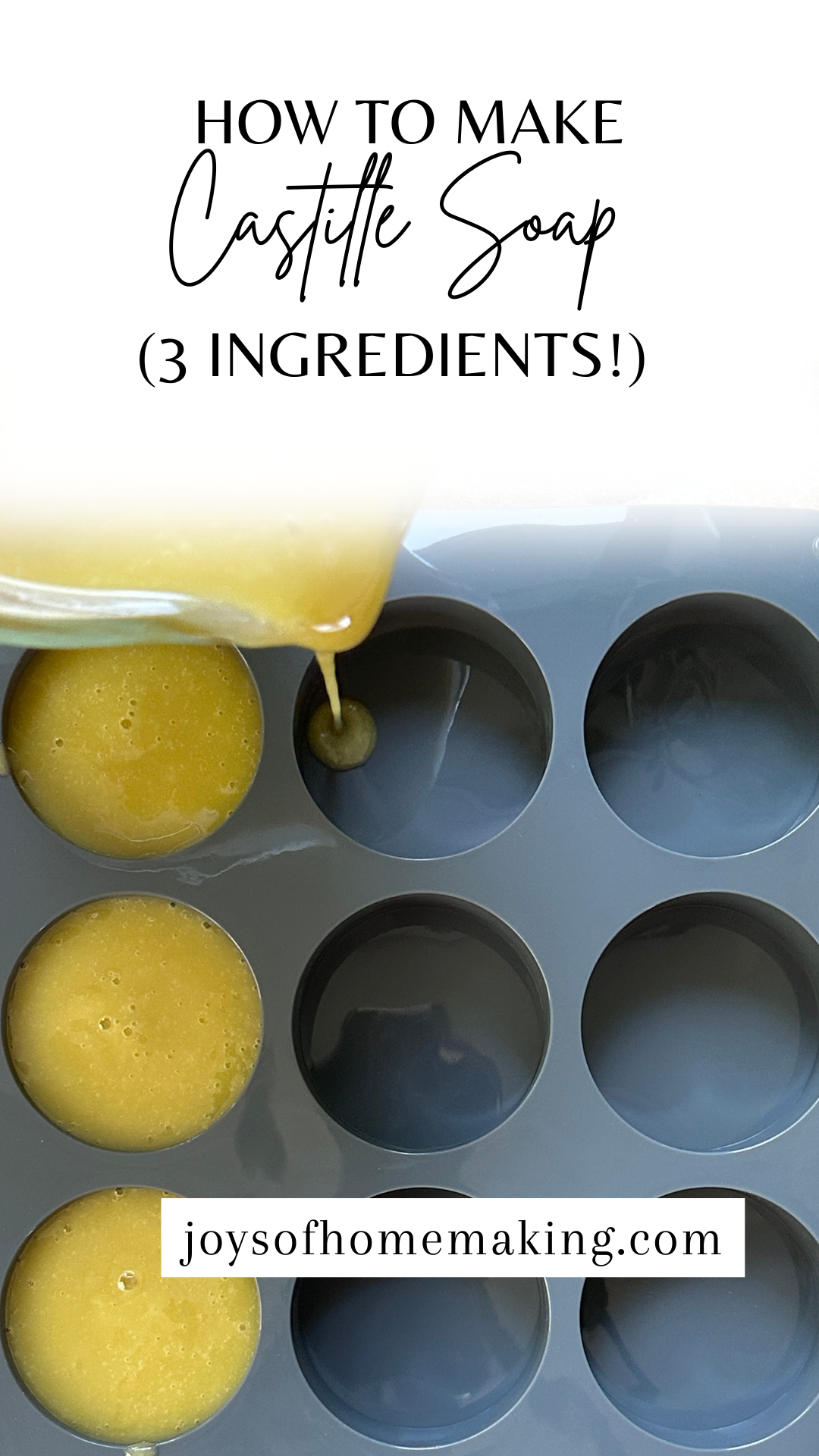
That’s when I discovered Castile soap—a humble, time-honored soap made with just three ingredients: olive oil, lye, and water. No fragrances. No dyes. No fillers. Just pure, gentle simplicity.
After weeks of research, a little courage, and a quiet afternoon in the kitchen, I made my very first batch. And friends… my heart settled. I knew right then that I had to share this with you.
What Is Castile Soap?
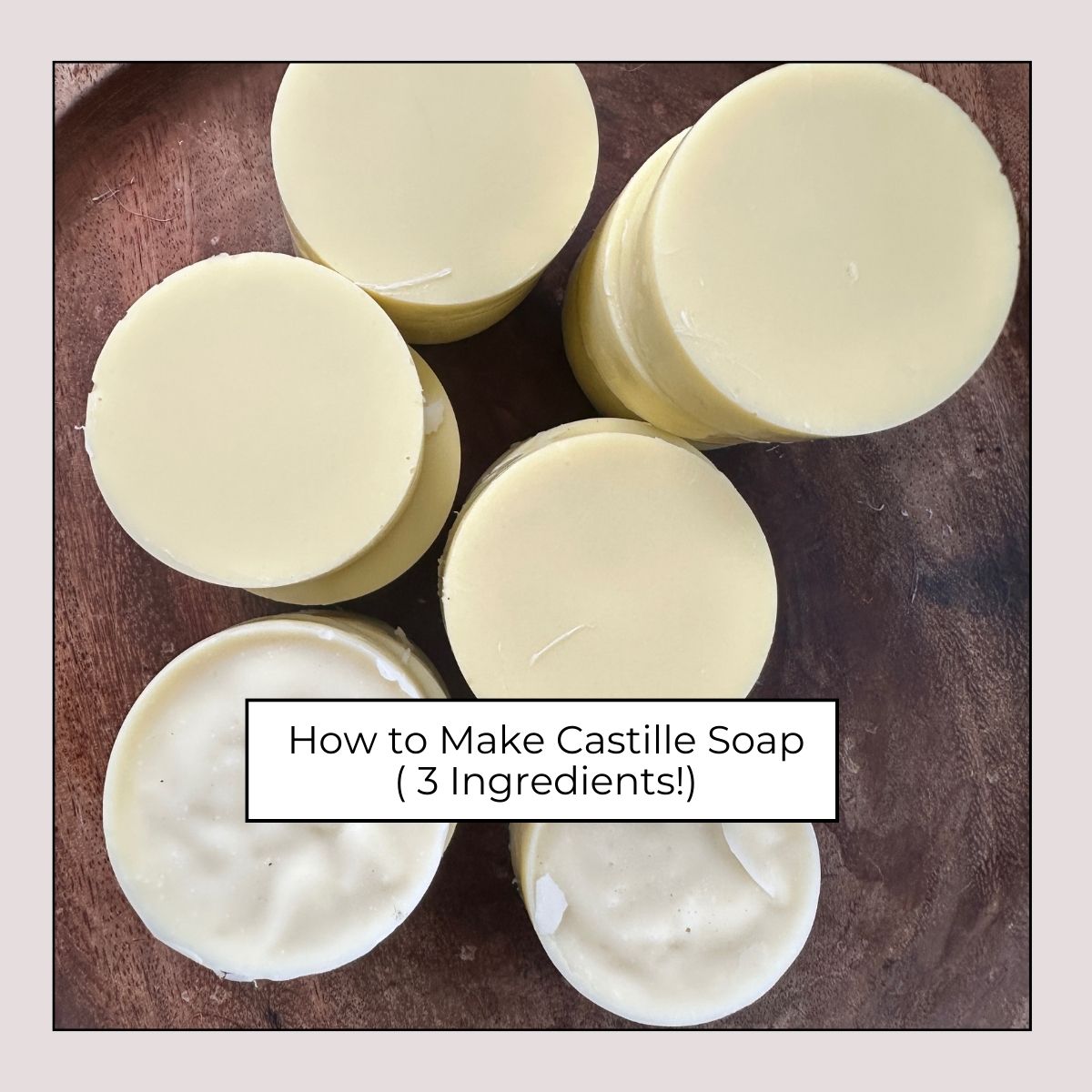
Castile soap is a plant-based soap traditionally made with 100% olive oil. Unlike modern commercial soaps that contain detergents and synthetic additives, true Castile soap is known for being incredibly gentle, moisturizing, and nourishing, making it ideal for sensitive skin, babies, and those with allergies or eczema.
Because olive oil is rich in antioxidants and fatty acids, Castile soap cleans without stripping the skin of its natural oils. It’s mild, creamy, and feels like something your great-grandmother might have used—and trusted.
A Little History of Castile Soap
Castile soap gets its name from the Castile region of Spain, where olive oil was abundant and soapmakers perfected the art of turning it into a pure cleansing bar centuries ago.
Originally, Castile soap was considered a luxury item—simple, yes, but precious. Over time, it spread throughout Europe and eventually the world, cherished for its purity and effectiveness.
In many ways, making Castile soap today feels like reclaiming a forgotten skill—one rooted in self-sufficiency, frugality, and care for the home.
Why Castile Soap Is Perfect for Sensitive Skin
One of the reasons I fell in love with Castile soap is how minimal it is. Fewer ingredients mean fewer chances for irritation.
Castile soap is:
- Free of synthetic fragrances and dyes - You could add fragrances using pure essential oils but this time, I didn't as I made this soap for my son.
- Naturally moisturizing
- Non-toxic and biodegradable
- Gentle enough for children and sensitive skin
- Long-lasting when properly cured
For my son, it meant relief. For me, it meant peace of mind.
What You Can Use Castile Soap For
Once you start making Castile soap, you’ll be amazed at how versatile it is. A single bar can be used for:
- Hand soap
- Body soap
- Face cleansing (especially for sensitive skin)
- Baby soap
- Shaving soap
- Household cleaning (when diluted)
It’s one of those beautiful homestead staples that quietly earns its place on the shelf.
A Note About Safety Before We Begin
We do need to talk about lye for just a moment.
Lye (sodium hydroxide) is a necessary ingredient in real soapmaking. When mixed correctly with oils, it completely transforms during the saponification process—there is no lye left in the finished soap.
However, lye is caustic in its raw form, so please:
- Wear gloves and eye protection
- Work in a well-ventilated area
- Measure carefully and never rush
Soapmaking teaches patience and respect—and it rewards both.
Simple Homemade Castile Soap Recipe
This is a true Castile soap recipe, made with only olive oil.
Ingredients You'll Need
- 21.2 oz (by weight) or 600 grams olive oil (use pure olive oil, not pomace)
- 2.8 oz lye or sodium hydroxide (caustic soda)
- 3.8 oz distilled water
- 8-10 drops of essential oil (optional)
(Always measure by weight, not volume, for accuracy.)
Equipment You'll Need
- 1 heat-resistant huge bowl for making the lye solution
- 1 heat-resistant bowl for olive oil
- 1 container with lid to store your lye (caustic soda flakes) before making the lye solution. Cover it with lid while still preparing for the soap making process to avoid accidents.
- Stainless steel pot for heating the olive oil
- Immersion blender / handheld blender
- Kitchen scale
- Gloves and eye protection
- Thermometer
Instructions
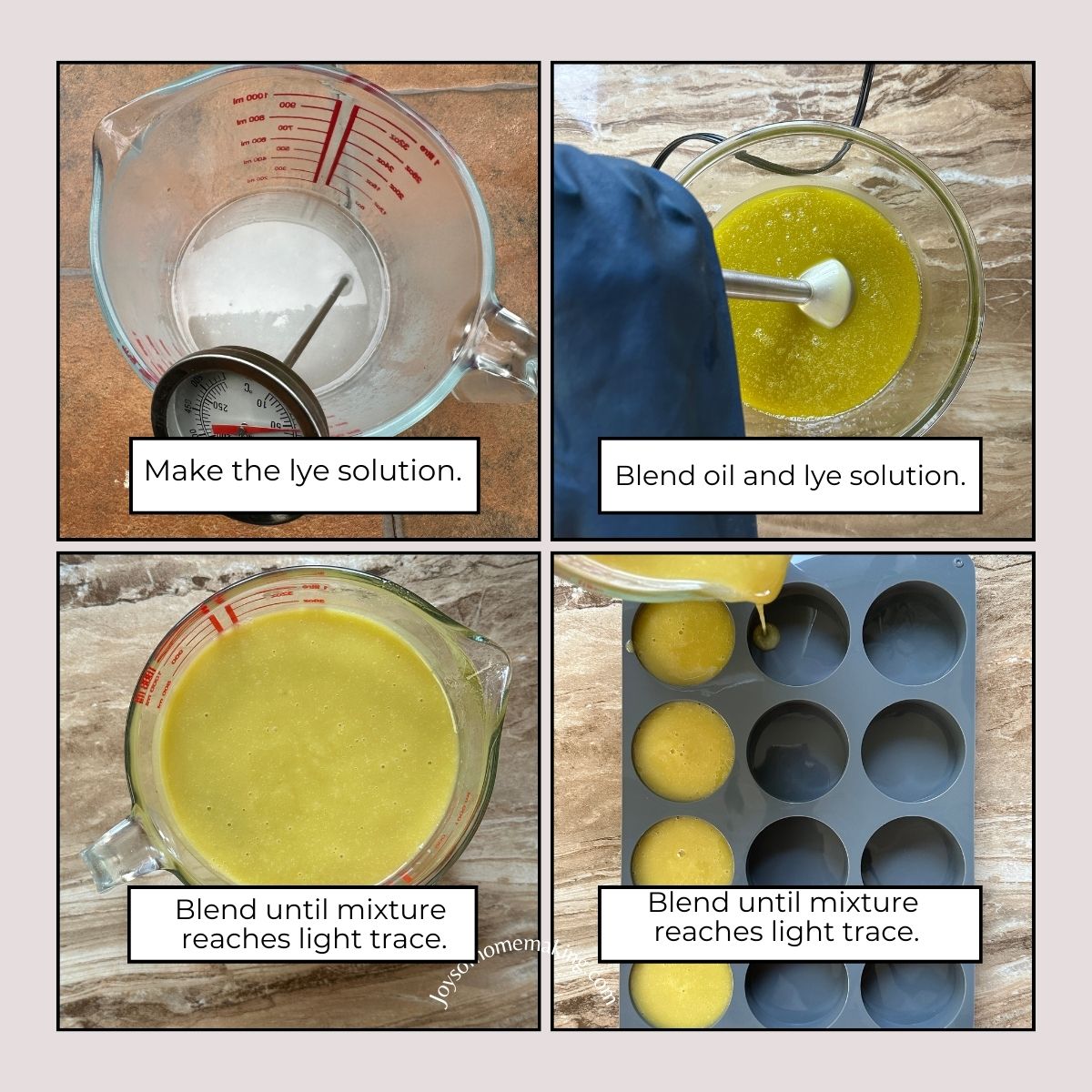
- Prepare your space
Gather all tools and ingredients. Put on gloves and eye protection. - Mix the lye and water
Slowly add the lye to the water (never the other way around), stirring gently until dissolved. Set aside to cool. - Warm the olive oil
Gently warm the olive oil until it reaches a similar temperature as the lye water (around 100–110°F). - Combine and blend
Slowly pour the lye water into the olive oil. Use an immersion blender, blending in short bursts, until the mixture reaches light trace. - Pour and rest
Pour the soap batter into a mold. Cover lightly and let it rest undisturbed for 24–48 hours. - Unmold and cure
Cut into bars and place in a cool, dry area to cure for at least 6–8 weeks. Castile soap benefits from even longer curing—the longer it rests, the harder and gentler it becomes.
What Is Saponification?
Saponification is the quiet little miracle that turns simple ingredients into real soap.
At its core, saponification is the chemical reaction that happens when lye is combined with oils and water. As intimidating as lye may sound, it is essential—and once the process is complete, it is completely transformed. There is no lye left in properly made soap.
When the lye solution meets the olive oil, it begins breaking the oil down and rearranging it into soap and naturally occurring glycerin. This is what gives handmade soap its gentle, moisturizing quality—something commercial soaps often strip away.
I like to think of saponification as a slow, careful transformation. With patience and proper measurements, harsh ingredients soften into something nourishing and kind—much like many things we tend to in the home.
What Is a Light Trace?
“Trace” is a term you’ll hear often in soapmaking, and it simply refers to the point when the soap mixture begins to thicken.
A light trace is the earliest stage of this thickening process. When you lift your spoon or immersion blender and let the soap batter drizzle back into the bowl, it will briefly sit on the surface before gently melting back in. The texture is similar to thin pudding or warm custard.
Reaching a light trace means the oils and lye have emulsified properly, and saponification has officially begun. For Castile soap, this stage can take longer than other recipes because olive oil moves slowly—and that’s perfectly normal.
Working at a light trace keeps the soap smooth and easy to pour, and it’s exactly where you want to be for a simple, additive-free Castile soap.
Can I Use Castile Soap After It Hardens?
This is one of the most common questions I see when it comes to Castile soap—and the short answer is: not just yet.
Even though your Castile soap may feel firm and fully formed after a few days, it still needs time to rest and mature. This resting period is called curing, and it’s an essential part of the soapmaking process.
During curing, excess water slowly evaporates, the bar becomes harder, and—most importantly—the soap becomes gentler on the skin. True Castile soap, made with 100% olive oil, benefits from a longer cure than most soaps. While it may be technically safe to use after about 4 weeks, it truly shines after 6 to 8 weeks, and many soapmakers prefer to cure it even longer.
The longer you wait, the milder and creamier the soap becomes, with a softer lather that’s especially kind to sensitive skin.
I know waiting can be hard (I felt the same way!), but giving it time allows it to become exactly what it’s meant to be—gentle, nourishing, and worth every quiet day it spends resting on the shelf.
More Homemade Ideas
Are you looking for more homemade ideas? Feel free to browse around!

A Gentle Gift From the Home
If you’ve been longing to make something simple and meaningful for your family, I hope this inspires you to try. There’s such joy in knowing exactly what touches the skin of the ones you love most.
From my home to yours,
thank you for being here 🤍