I used to buy all our fruit jams, sauces, and fruit butters from the grocery store. Making them myself never really crossed my mind until I started learning how to make more of our everyday pantry staples from scratch.
And now? I actually prefer the homemade kind!
I love that I can use fresh fruit, decide how much sugar to add, and skip the preservatives and other ingredients I don't really need. But more than anything, I think homemade fruit jams just taste better.
After making homemade applesauce and apple butter, I thought I'd try making something with a fruit that's practically everywhere around us—pineapple!
We're lucky to live near pineapple plantations here in the Philippines, including those of Dole and Del Monte. Fresh pineapples are easy to find and cheap here (at less than a dollar per kilo), and when they're perfectly ripe, they're so sweet that you almost don't need to do anything with them.
But I wanted to try making homemade pineapple jam, partly because I love having different fruit spreads in the fridge and partly because I've been thinking of making pineapple turnovers.
And I'm so glad I tried it!
This recipe only needs three ingredients: fresh pineapple, sugar, and lemon juice. No pectin, no special equipment, and nothing complicated.
I also made mine a little chunky. I know some people prefer their jams smooth, but we like having little pineapple tidbits in ours. It almost feels like a cross between a jam and pineapple preserves.
It's so good on warm toast, and I can already think of a dozen other ways to use it.
Why Make Your Own Pineapple Jam?
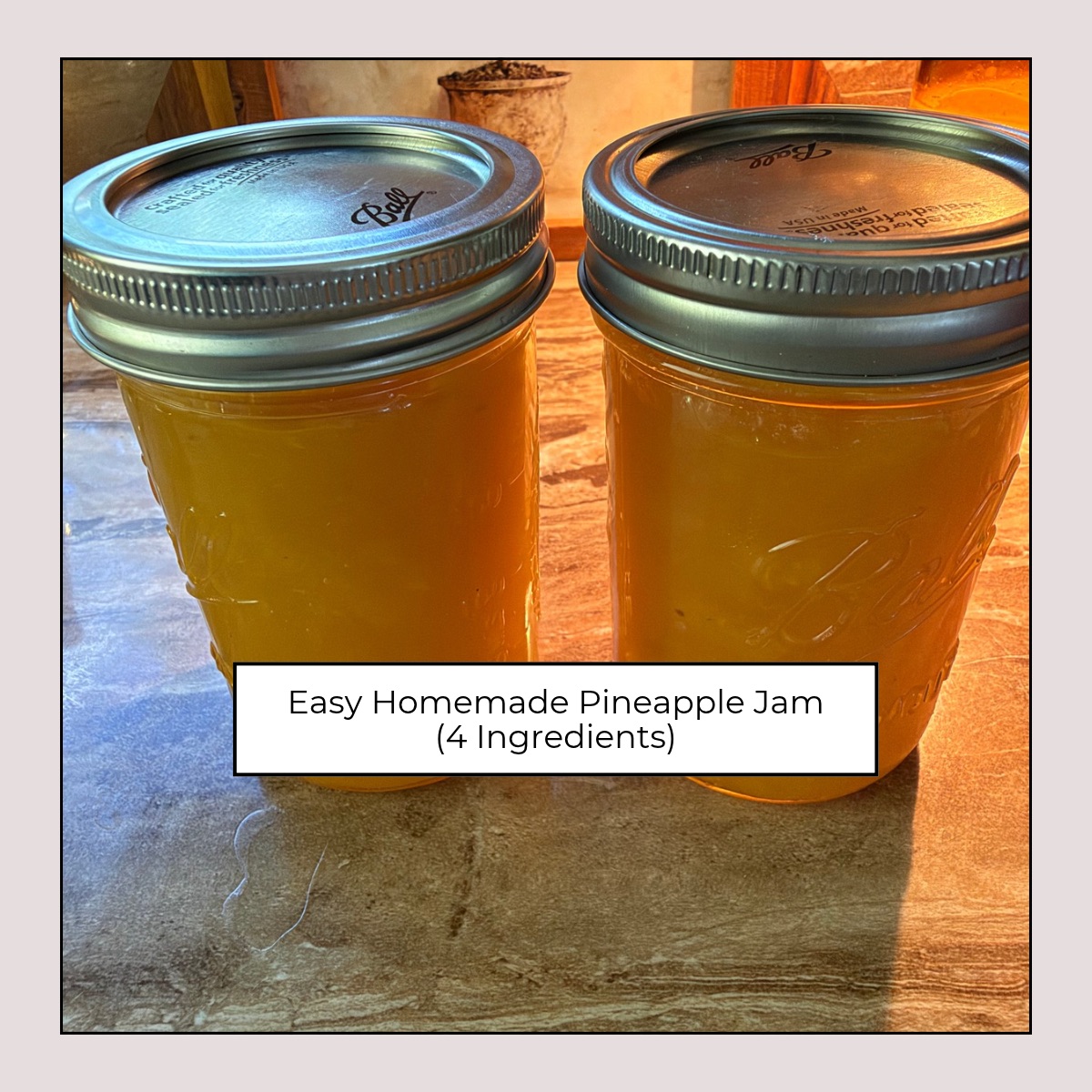
For me, the biggest reason is knowing exactly what's in it. My husband has a very sensitive stomach, and store-bought fruit spreads don't always agree with him. So I thought, why not try making my own? That way, I can keep the ingredients simple, leave out anything that might upset his stomach, and hopefully let him enjoy a little jam on his toast without having to make a quick trip to the bathroom afterward!
With this recipe, I'm only using pineapple, sugar, and lemon. That's it.
I also like being able to adjust the sweetness. Some pineapples are already very sweet, especially when they're fully ripe, so I don't always want to add as much sugar as you would find in a typical store-bought jam.
Of course, sugar does help thicken jam, so you can't always reduce it too much and expect the same consistency.
Another thing I love is the texture. Store-bought pineapple jams can be very smooth, almost like jelly--which I really don't like. There's nothing wrong with that, but I wanted something with actual pieces of pineapple.
And if you have a few ripe pineapples sitting on your kitchen counter, making jam is a good way to use some of them before they get too ripe.
Ingredients for Homemade Pineapple Jam
You only need three ingredients for this recipe.
1 Fresh pineapple – about 600 grams
I use fresh pineapple, including the juice that comes out while chopping it. Choose a ripe one if possible because the flavor of the pineapple really makes a difference here.
You can chop it into small pieces so you don't need to blend it using a regular blender or immersion blender. But most of the time, I just chop it into bigger chunks and then blend it afterwards, after cooking, using an immersion blender.
The pineapple softens as it cooks, but you still get those little fruit bits in the finished jam.
Granulated sugar – 1 cup
I find this a good starting amount for 500-600 grams of pineapple, but you can adjust it depending on how sweet your fruit is.
I suggest tasting your pineapple first. If it's already very sweet, you may want to use slightly less sugar. Just remember that reducing the sugar can make the jam a little softer.
Fresh lemon juice – 2 tablespoons
The lemon juice helps balance the sweetness. Without it, I find that sweet fruit spreads can taste a little flat.
SALT
Add a pinch of salt to help balance the sweetness.
And that's really all you need!
How to Make Homemade Pineapple Jam
I make this jam on the stovetop in a saucepan. It's pretty straightforward, although you do need to keep an eye on it toward the end because the mixture gets thick and can stick to the bottom.
Prep time: 10 minutes
Cooking time: 30–45 minutes
Yield: About 1½–2 cups
Ingredients
- 600 grams fresh pineapple, finely chopped, including its juice
- 1 cup granulated sugar
- Fresh lemon juice from 1 lemon
Instructions
1. Chop the pineapple.
Peel the pineapple, remove the eyes and tough core, then chop the flesh into small pieces.
You don't have to make them perfectly even. I actually like having some pieces slightly bigger than others because they give the jam a nice texture.
If you prefer smooth jam, you can pulse the pineapple in a food processor instead before cooking.
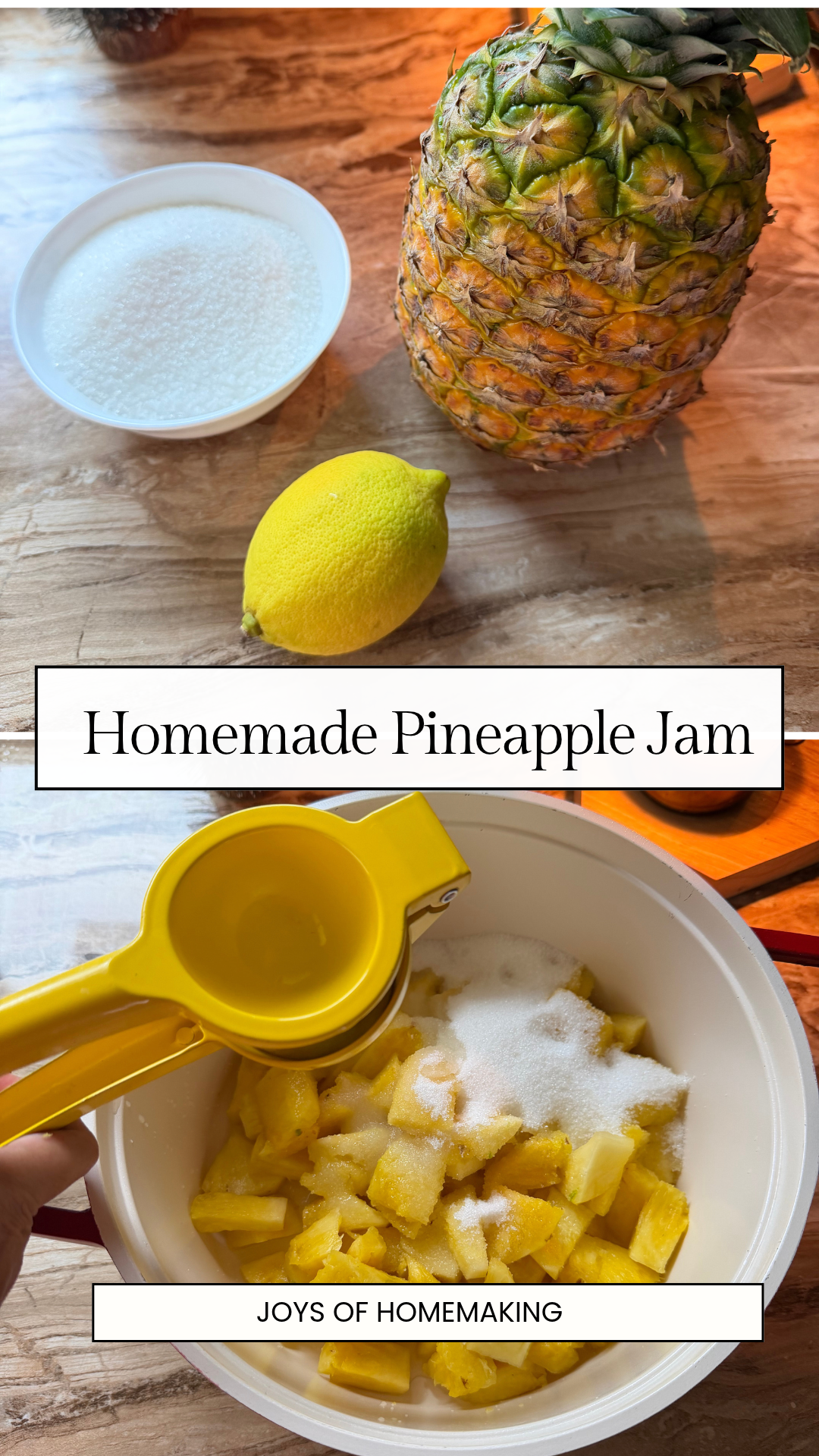
2. Add everything to a saucepan.
Put the chopped pineapple, sugar, and lemon juice in a heavy-bottomed saucepan.
Give everything a good stir and let it sit for about 5–10 minutes. The sugar will start drawing some of the juice out of the pineapple.
3. Cook until thickened and blend to your desired consistency.
Place the saucepan over medium heat and bring the mixture to a gentle boil.
Once it starts bubbling, lower the heat and let it simmer uncovered.
It usually takes around 30–45 minutes for the mixture to thicken, depending on how juicy your pineapple is.
At first, it might look like there's too much liquid, but don't worry. A lot of that will evaporate as the pineapple cooks.
Stir occasionally at the beginning, then more frequently as the jam gets thicker.
You'll notice the pineapple becoming softer and the syrup getting thicker and glossier.
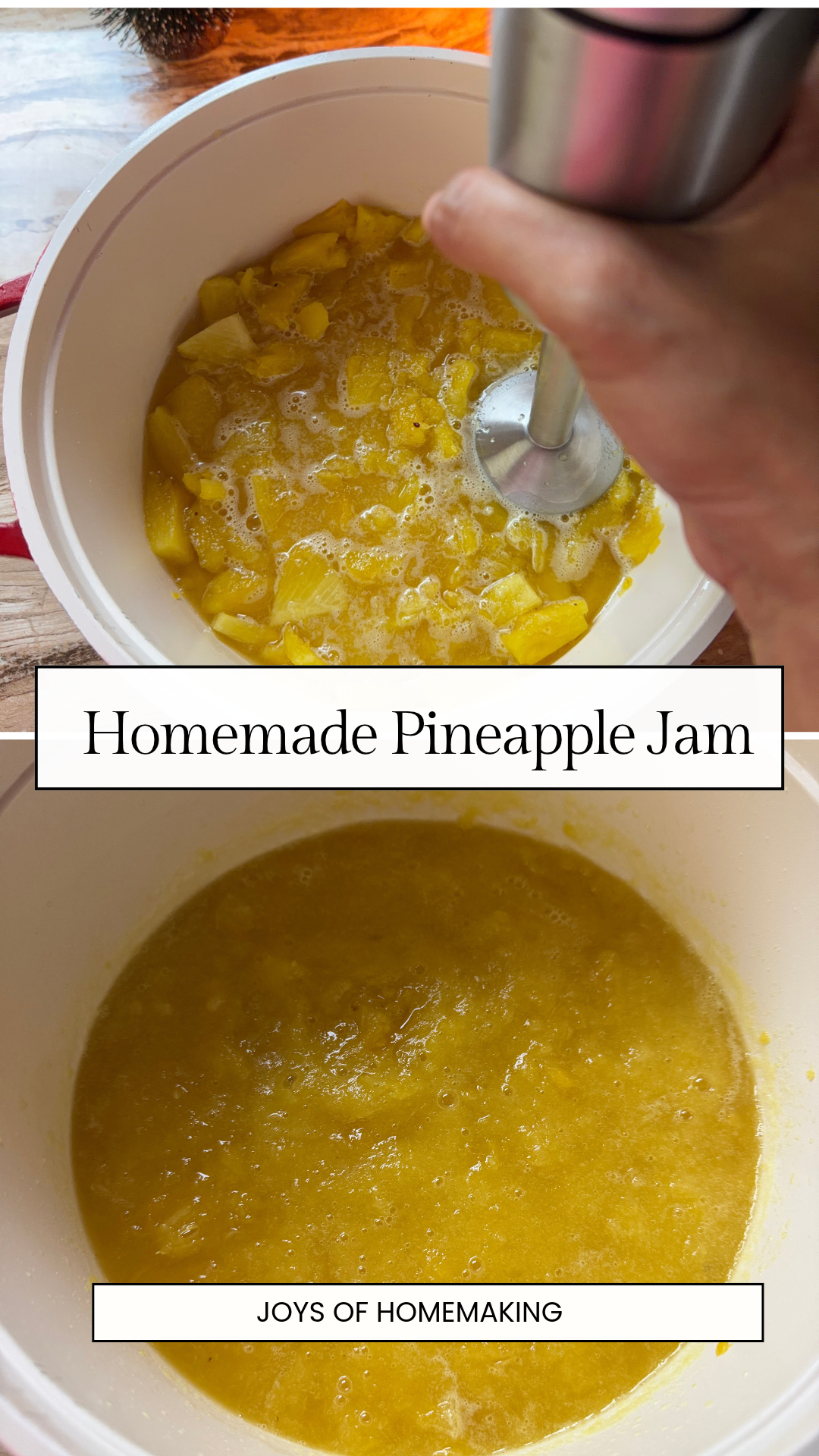
4. Check if the jam is ready.
One easy way to check is to put a little jam on a chilled plate.
Let it cool for a minute, then gently push it with your finger. If it's thick enough that it doesn't immediately run back together, it's probably ready.
I don't cook mine until it's extremely stiff because I like it spreadable, with a little syrup coating the pineapple pieces.
It will also thicken a bit more as it cools.
5. Transfer to jars.
Once you're happy with the consistency, remove the saucepan from the heat.
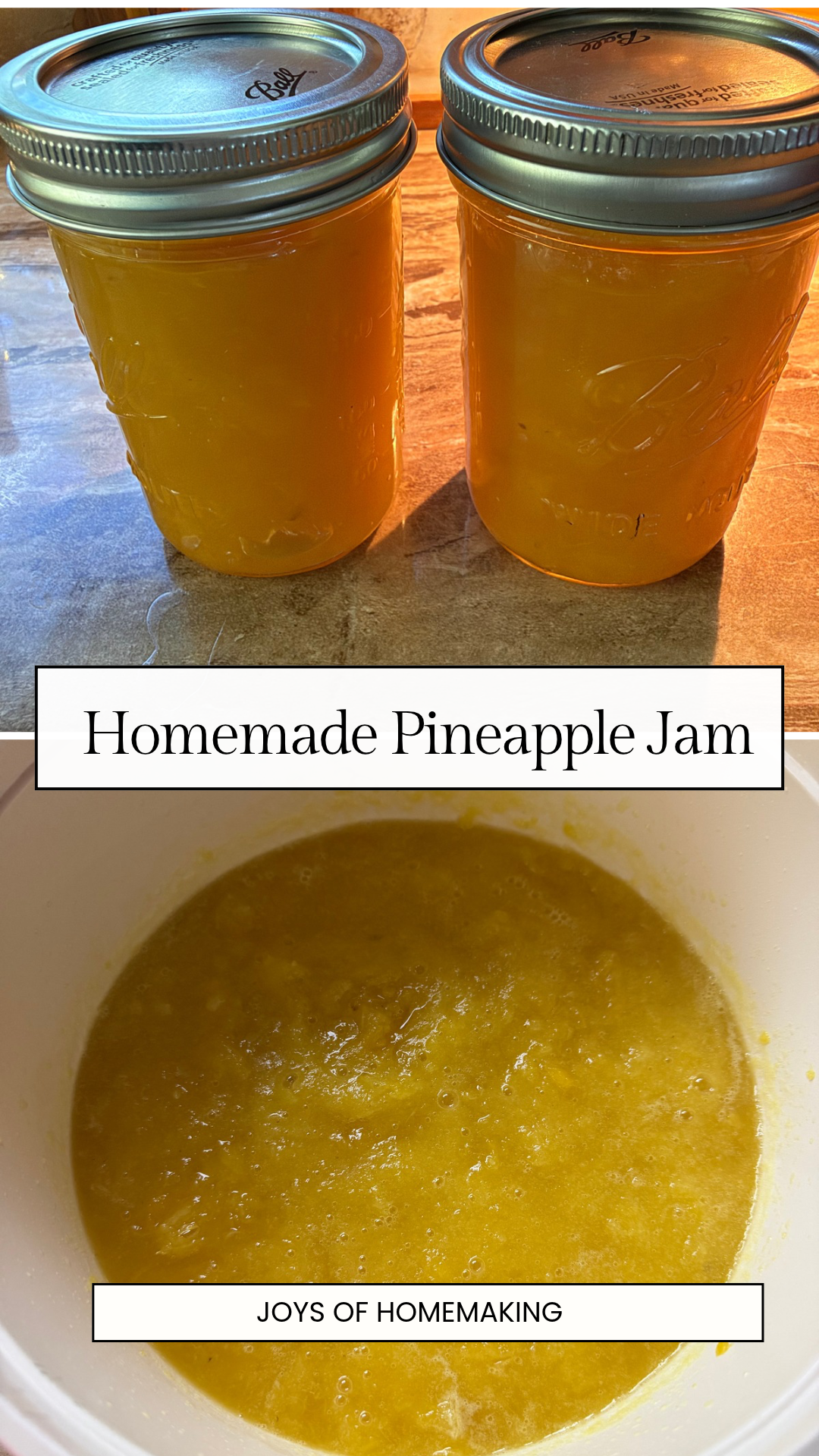
Let the jam cool slightly before transferring it to clean glass jars. Allow it to cool, then refrigerate promptly.
That's it. You have homemade pineapple jam!
A Few Things I've Learned About Making Fruit Jam
Use ripe pineapple if you can.
I think this makes the biggest difference.
If your pineapple is sweet and flavorful to begin with, your jam is going to taste better. You also won't need to rely on lots of sugar to make it taste good.
Don't blend everything if you like chunky jam.
I know it's tempting to throw the pineapple into a blender to save time, but I actually enjoy the little pieces of fruit.
They become soft and almost translucent as they cook, and they're especially nice if you plan to use the jam for pastries.
If you want a finer texture, though, there's no reason you can't blend it.
Give it enough time to cook.
Pineapple is quite juicy, so don't be surprised if the mixture looks watery at first.
I prefer letting it cook slowly rather than turning the heat up too high to speed things along.
Toward the end, stir more often because the sugar can burn if you leave it unattended.
Don't worry if it's not as firm as store-bought jam.
This recipe doesn't use commercial pectin, so the texture is a little different.
Mine is more of a soft, chunky jam, and that's exactly how we like it.
If yours turns out too runny, you can always put it back on the stove and let it cook a little longer.
What Can You Do With Pineapple Jam?
One thing I didn't realize when I first started making fruit jams is just how useful they are in the kitchen.
They're not just for spreading on bread!
Here are some of the ways I like to use pineapple jam, along with a few things I'm planning to make with it.
On toast or homemade bread
This is probably the most obvious one, but it's also one of my favorites. I love it on warm, buttered toast. The sweet pineapple goes so well with the butter.
On pancakes or waffles
You can use it instead of syrup, or add a spoonful on top with a little butter. It's especially good when the jam is slightly warm.
For homemade pineapple turnovers
This is actually one of the reasons I wanted to make pineapple jam.
I love the idea of using the chunky pineapple filling inside flaky pastry. Just make sure the jam is thick and completely cooled before using it as a filling, so it doesn't make the pastry too wet.
In cakes, cookies, and pastries
You can use it between cake layers, in thumbprint cookies, or as a filling for sweet rolls.
For cooking savory dishes
Pineapple works so well with savory food, too.
You can mix a little jam with soy sauce, garlic, and vinegar to make a sweet and tangy glaze for chicken or pork.
On homemade yogurt
I also like the idea of stirring a spoonful into plain homemade yogurt. You get the sweetness and pineapple flavor without needing to buy flavored yogurt.
And of course, there's nothing stopping you from eating a little straight from the jar!
How to Store Homemade Pineapple Jam
Since I'm making this as a small batch for our family, I don't bother with canning.
I just keep the jam in clean glass jars in the refrigerator.
In the refrigerator: Keep it in an airtight jar and use it within 1–2 weeks. Always use a clean spoon when taking jam out of the jar.
In the freezer: You can freeze the jam for about 3 months for best quality. Use a freezer-safe container and leave a little room at the top for expansion.
This particular recipe is meant for refrigerator or freezer storage. It hasn't been tested for shelf-stable canning, so I wouldn't recommend storing sealed jars in the pantry. If you want to preserve pineapple jam for longer, use a tested canning recipe and follow its processing instructions.
Frequently Asked Questions
Can I use canned pineapple?
Yes, although I prefer fresh pineapple whenever it's available.
If you're using canned pineapple, choose the kind packed in juice rather than heavy syrup. Drain it before measuring, and adjust the sugar if needed.
Do I need pectin?
No, you don't need pectin for this recipe.
The pineapple and sugar cook down into a thick fruit spread. It won't necessarily have that firm, jelly-like consistency of some store-bought jams, but I actually prefer it this way.
Can I make pineapple jam with less sugar?
You can reduce the sugar a little, especially if you're using very sweet pineapple.
Just keep in mind that the jam may turn out softer and won't have the same keeping qualities as a traditional higher-sugar jam.
Why isn't my pineapple jam thickening?
It probably just needs more time on the stove.
Pineapple contains quite a bit of water, and that moisture needs to evaporate before the mixture becomes jammy.
Keep simmering it gently and stir regularly. Remember that it will also thicken as it cools.
Another Pantry Staple I Can Make at Home!
I think one of the things I enjoy most about making food from scratch is discovering how many everyday things I can actually make myself.
A few years ago, I wouldn't have thought twice about picking up a jar of fruit jam at the grocery store. Now, if I have some extra fruit in the kitchen, my first thought is usually, what can I make with this?
Not everything needs to be homemade, of course. But I like having the option, and I love slowly adding more recipes to my collection of homemade pantry staples.
This pineapple jam is definitely one I'll be making again, especially since fresh pineapples are so easy to find where we live.
And next on my list? Those pineapple turnovers I've been wanting to make!
Have you tried making your own fruit jam? What's your favorite fruit to use? I'd love to hear about it!