Hello, homemaker!
I decided to make this homemade sunscreen balm because lately, we've been spending a lot of time under the sun.
Ever since we started homeschooling our son, our days have started looking a little different. Instead of spending every day indoors, we now spend many mornings at the beach. My husband has always loved surfing, and now that our little boy has started surfing too, we find ourselves packing up our boards, and beach bag every time there are waves.
It's become one of our favorite ways to learn, explore nature, and simply enjoy life together.
Of course, all that sunshine also means we need to protect our skin.
The problem is that I've never been a huge fan of many commercial sunscreens. A lot of them contain ingredients that aren't just questionable for our skin, but can also be harmful to coral reefs and marine life. I wanted something that aligned with our family's values—something made with simple ingredients that I actually recognize.
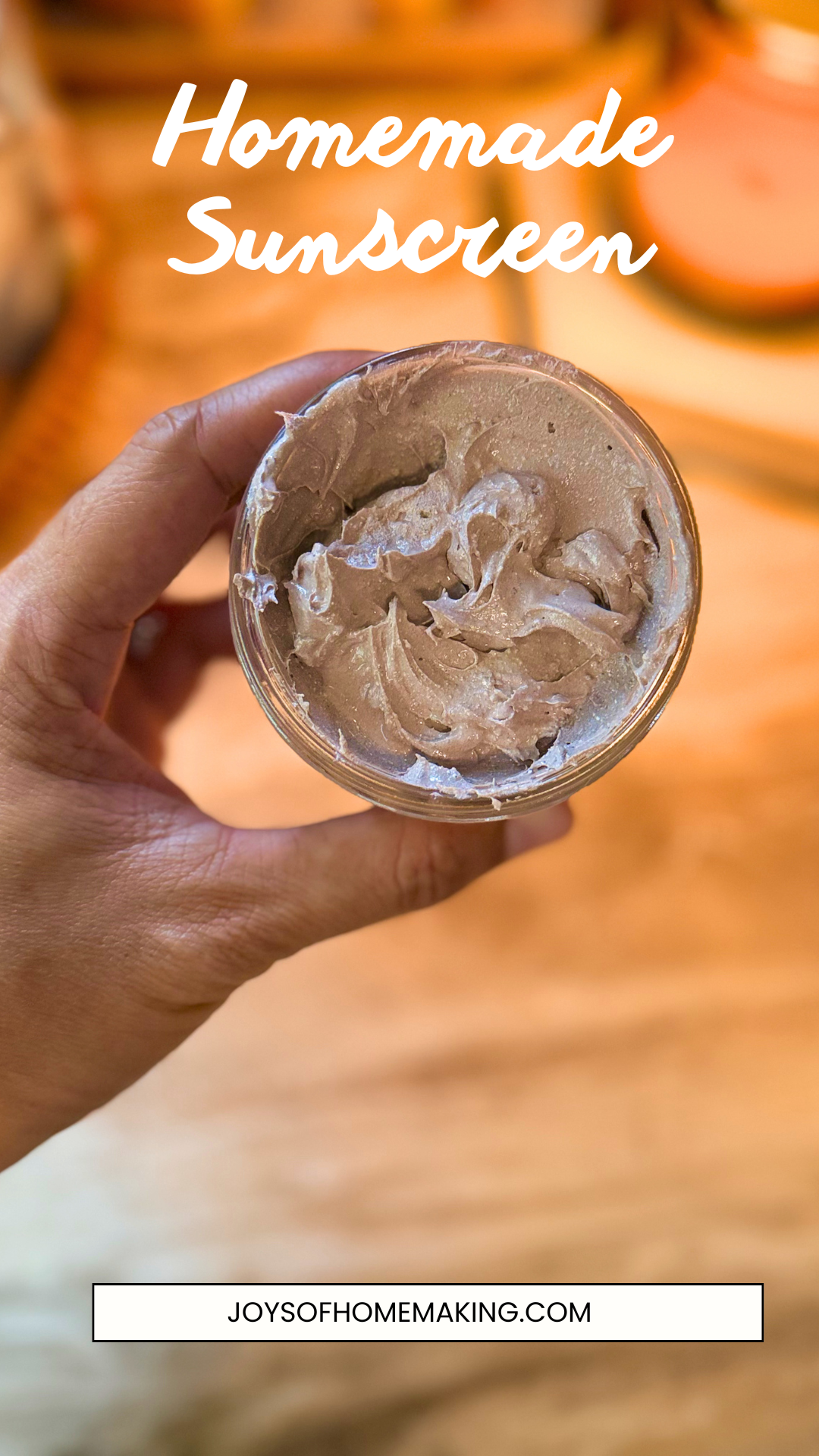
So I started making this homemade sunscreen balm.
It combines nourishing oils and butters with non-nano zinc oxide, a mineral that sits on top of the skin and reflects the sun's rays instead of being absorbed into the body. It's simple to make, water-resistant thanks to beeswax, and perfect for families who love spending time outdoors.
Disclaimer
A Quick Note: I love making as many things from scratch as I can, but it's important to know that homemade sunscreen hasn't been laboratory tested, so I can't guarantee its SPF or level of sun protection. If you're planning to spend long hours in the sun or need dependable protection, I recommend using a commercially tested mineral sunscreen. As with any homemade skincare product, do a small patch test first and stop using it if it causes any irritation.
Why You'll Love This Homemade Sunscreen
- Made with simple, recognizable ingredients
- Uses non-nano zinc oxide for broad-spectrum mineral protection
- Free from synthetic fragrances
- Reef-friendly when made without harmful chemical UV filters
- Doubles as a moisturizing skin balm
- Great for beach days, gardening, hiking, camping, and everyday outdoor adventures
Why Non-Nano Zinc Oxide?
Non-nano zinc oxide is the active ingredient that provides sun protection.
Unlike chemical sunscreen ingredients that absorb UV rays, zinc oxide forms a physical barrier on the skin that reflects both UVA and UVB rays.
Choosing non-nano zinc oxide is important because the particles are large enough that they are less likely to penetrate healthy skin.
It also avoids some of the controversial ingredients commonly found in conventional sunscreens, such as oxybenzone and octinoxate, which have been restricted in some places because of concerns about their effects on coral reefs.
About the Ingredients
One of my favorite things about making skincare products at home is knowing exactly what's going into them. Every ingredient in this recipe has a purpose, and together they create a nourishing, easy-to-apply sunscreen balm.
Non-Nano Zinc Oxide
This is the star ingredient of the recipe. Non-nano zinc oxide is a mineral that sits on top of the skin and helps reflect both UVA and UVB rays. Be sure to use non-nano zinc oxide, not regular zinc oxide powder intended for other uses.
Shea Butter
Shea butter makes the balm rich and moisturizing while helping soothe dry, sun-exposed skin. It also gives the sunscreen a smooth, creamy texture that's easy to spread.
Coconut Oil
Coconut oil adds moisture and helps the balm glide onto the skin. Since it becomes solid at cooler temperatures and melts in warm weather, it also contributes to the balm's consistency.
Avocado Oil
Avocado oil is one of my favorite skincare oils because it's packed with vitamins A, D, and E along with nourishing fatty acids. It's deeply moisturizing without feeling too heavy and helps keep skin soft after a day in the sun. If your skin tends to get dry or feels tight after being outdoors, avocado oil is a wonderful addition.
Beeswax
Beeswax helps solidify the balm and gives it a bit of water resistance, making it more suitable for beach days or outdoor adventures. It also creates a protective barrier that helps lock moisture into the skin.
Homemade Sunscreen Balm Recipe
Ingredients
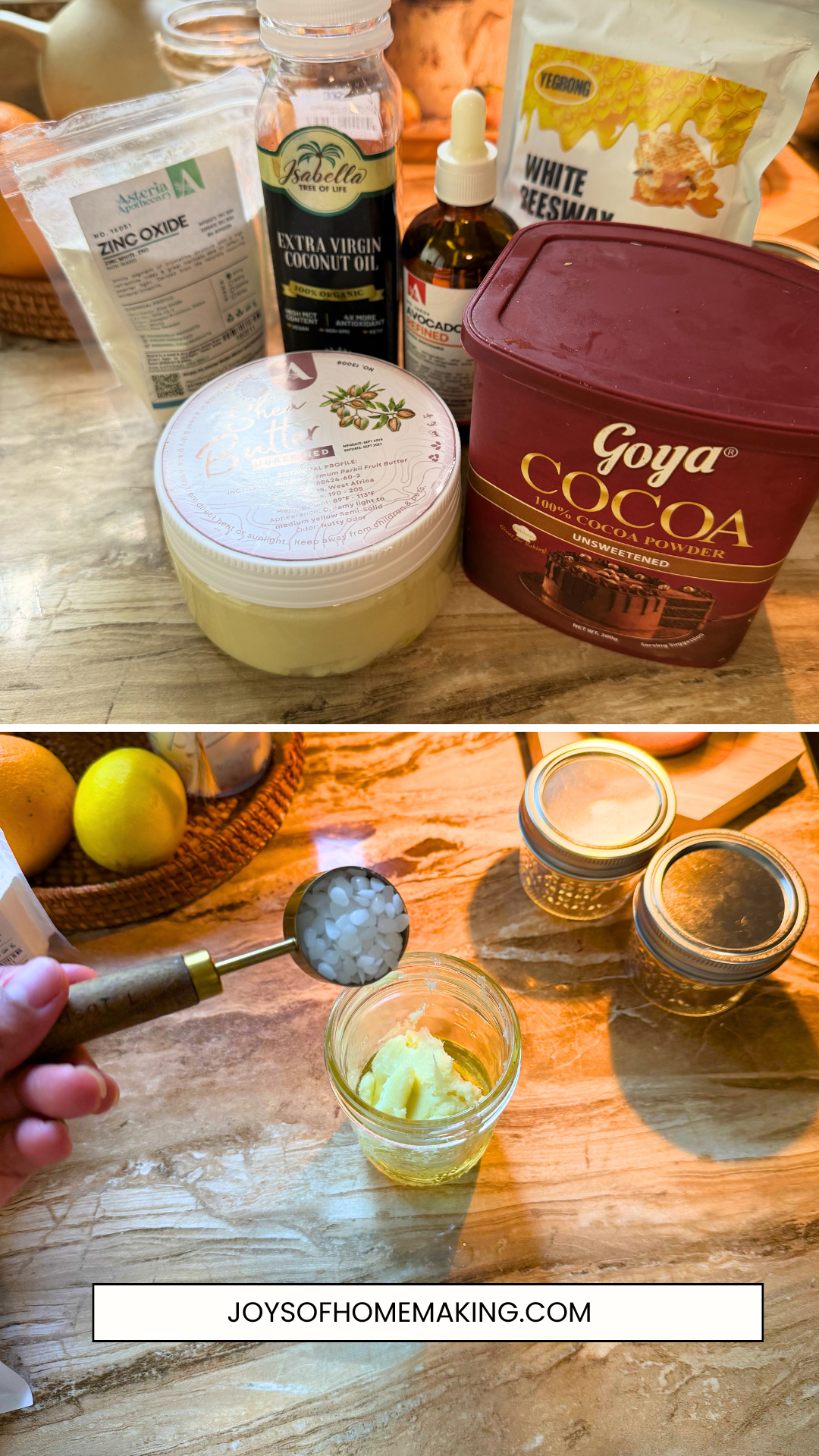
- ¼ cup coconut oil
- ¼ cup avocado oil
- ¼ cup shea butter
- 2 tablespoons beeswax pellets
- 2 tablespoons non-nano zinc oxide
- 1 teaspoon cocoa powder for tint
- 10 drops lavender essential oil (optional)
Equipment
- Double boiler ( I just used a mason jar and a pot)
- Measuring cup
- Silicone spatula
- Container ( I used this jar.)
Directions
- Add the coconut oil, avocado oil, shea butter, and beeswax to a double boiler.
- Heat gently until everything has completely melted.
- Remove from the heat and allow the mixture to cool slightly.
- Stir in the non-nano zinc oxide until completely incorporated.
- Optional: Add essential oil for fragrance.
- Stir in chocolate powder.
- Pour into clean tins or jars.
- Allow the balm to cool completely before placing the lid on.
That's it!
How to Use
Apply generously to all exposed skin about 15 minutes before going outside.
Reapply:
- Every two hours
- After swimming
- After towel drying
- After heavy sweating
Because this is a mineral sunscreen, you'll notice a slight white cast. That's completely normal and simply means the zinc oxide is doing its job.
How to Make Sunscreen Balm Video
Tips for Best Results
Apply More Than You Think
One of the biggest mistakes people make with sunscreen is simply not using enough.
Don't be afraid to apply a generous layer, especially on the nose, ears, shoulders, and tops of the feet.
Store Somewhere Cool
Because this recipe contains coconut oil and natural butters, it can soften or melt in very hot weather.
If you're heading to the beach, keep it inside a cooler or shaded bag whenever possible.
Wear Protective Clothing Too
Even natural sunscreen works best when combined with other forms of sun protection.
We love wearing:
- Rash guards
- Wide-brimmed hats
- Lightweight long sleeves
- Sunglasses
Customization Ideas
For a Firmer Balm
Increase the beeswax slightly.
For Sensitive Skin
Skip the essential oils altogether.
The recipe works beautifully without them.
Storage
Store in an airtight container away from direct sunlight.
It should last about 6 to 12 months, depending on the freshness of your oils.
If it develops an unusual smell or changes in texture, make a fresh batch.
Frequently Asked Questions
Does this homemade sunscreen have an SPF?
Since this recipe hasn't been laboratory tested, it's impossible to accurately assign an SPF rating.
Although non-nano zinc oxide is the active ingredient used in many commercial mineral sunscreens, homemade recipes cannot legally or reliably claim a specific SPF because ingredient distribution and testing affect the final level of protection.
For long days in intense sun or situations where a verified SPF is required, choose a commercially tested mineral sunscreen.
Is homemade sunscreen waterproof?
Not completely.
The beeswax helps it stay on the skin longer than a lotion, but it should still be reapplied after swimming or sweating.
Can I leave out the zinc oxide?
No.
Without zinc oxide, this recipe becomes a moisturizing body balm rather than a sunscreen.
Natural oils like coconut oil or raspberry seed oil should not be relied upon as adequate sun protection.
Is this safe for children?
Many families choose mineral sunscreens made with non-nano zinc oxide for children because they sit on top of the skin rather than being absorbed.
If you're using this on babies or very young children, it's always best to talk with your pediatrician first.
Looking for More Inspiring Homemade Ideas?
If you enjoy making things from scratch, take a look around for more simple homemade recipes, natural living ideas, and DIY projects to help you create a healthier, more intentional home—one homemade project at a time.




Final Thoughts
Making our own sunscreen has become just another small part of the slow, intentional life we're trying to build.
Just like baking our own bread, making yogurt, or mixing up homemade cleaners, it's one more way to know exactly what we're putting on our bodies and what we're washing into the ocean we love so much.
I hope this simple recipe encourages you to spend a little more time outside, soak up God's beautiful creation, and care for it well along the way.